
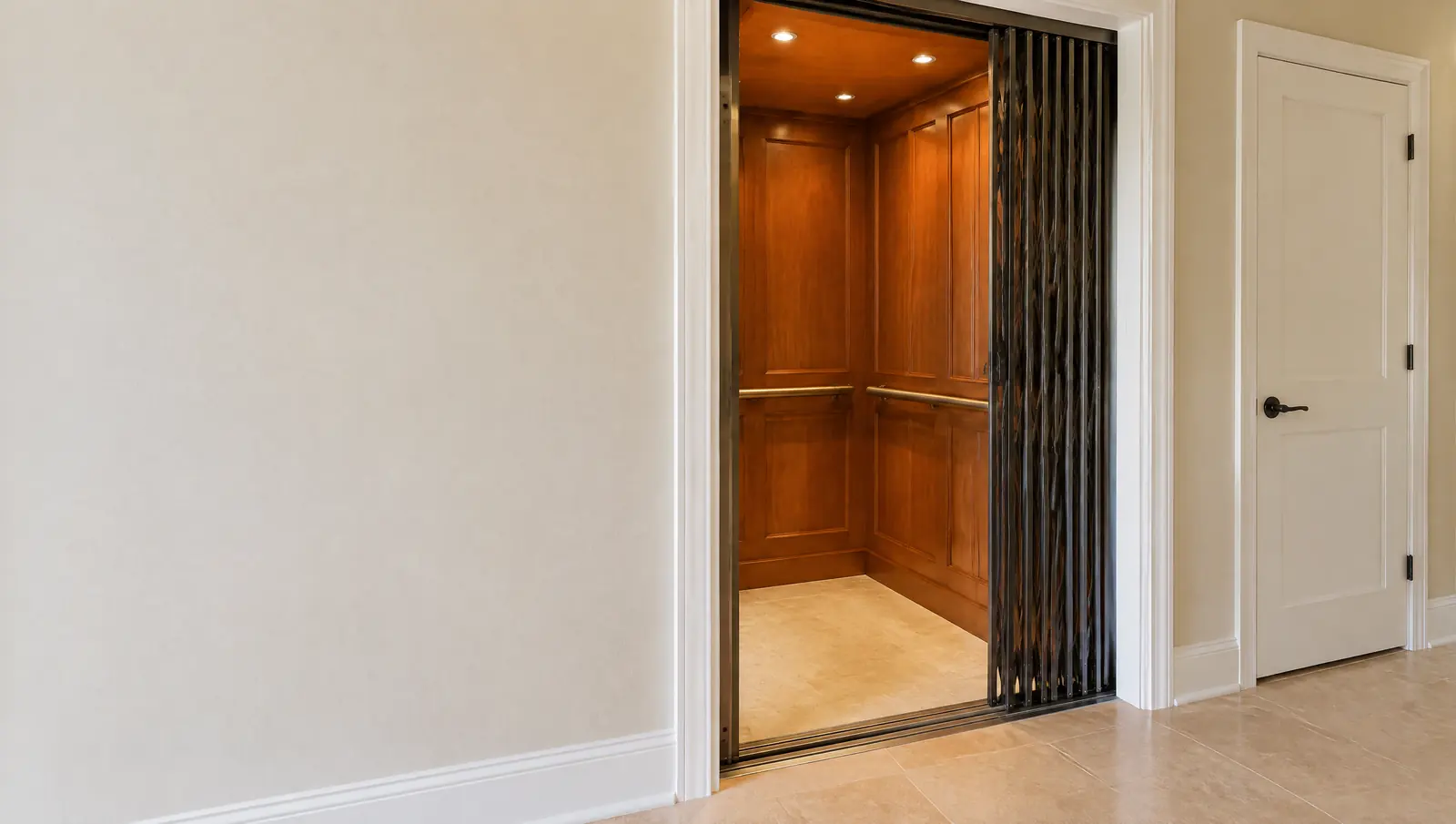
Hydraulic home elevators in Florida
A roomy elevator with a built-in cab that looks like part of the house.
Free home lift quote
Tell us a little about the home and who it is for. We will call you back to talk it through and arrange a free visit to measure.
Hydraulic elevators lift the cab with a piston. They need a shaft and space for the pump and controls, and in return give you a larger cab with room for a wheelchair and a companion.
- Free in-home consultation, no obligation
- Home elevators, stair lifts and platform lifts
- Miami-Dade, Broward, Palm Beach, Tampa Bay and Naples
The short answer
A hydraulic home elevator typically costs $22,000 to $53,000 installed, based on Fixr's national data, and a retrofit into an existing home starts at about $40,000 because a shaft and machine space have to be built. It gives the largest, most built-in feeling cab of the common home types.
Last updated
Who this is for
Hydraulic elevators suit new homes, major remodels and homes with stacked closets that can become a shaft. They are a good fit when a wheelchair user and a carer need to ride together.
Typical project sizes
Fixr says a hydraulic retrofit costs at least $40,000 and can reach $100,000 when extra construction is needed to fit and conceal it. In new construction Fixr gives about $40,000 for a hydraulic unit compared with about $25,000 for a cable-driven one.
Where does the hydraulic equipment go in a flood zone?
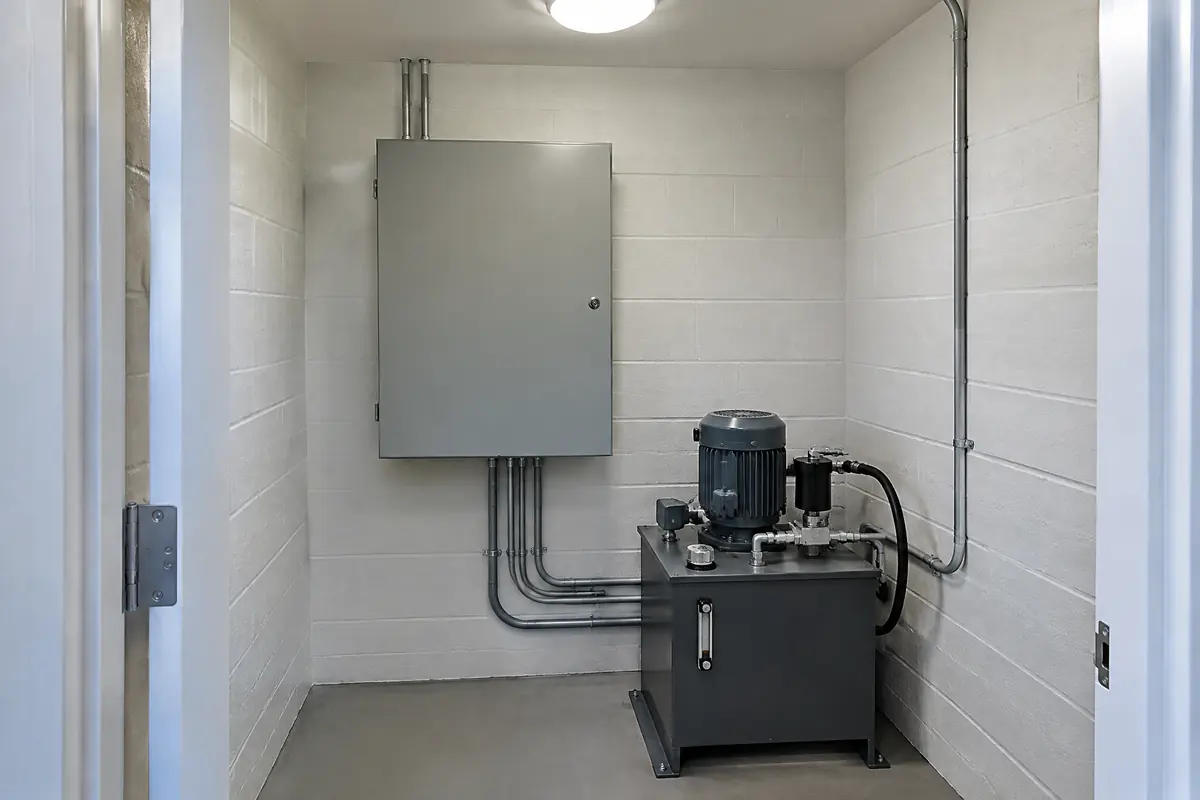
FEMA says electrical controls and hydraulic pumps should be located above the base flood elevation when possible. It also notes that some hydraulic elevators use a battery descent feature that lowers the car to the lowest landing when power fails, and that a float switch should be built into the controller so the car cannot descend into floodwater. In low-lying parts of Florida this shapes where the machine space goes.[2]
Holed or holeless?
FEMA explains that hydraulic elevators can be direct-acting with a piston set into the ground, or holeless. For flood-prone sites it suggests exploring holeless hydraulics, which are typically used in low-rise buildings of two or three floors.[2]
Frequently asked questions
Is a hydraulic elevator quieter than a pneumatic one?
Ride quality varies by model and installation. Ask to ride a working installation of any model you are considering, so you can judge noise and comfort yourself.
How much space does a hydraulic elevator need?
It needs a shaft on every floor it serves plus room for the pump and controls. Fixr notes that building codes in most areas limit a residential elevator cab to 18 square feet or less.
What maintenance does it need?
Fixr says hydraulic and cable drum elevators need an access panel built into the cab for regular maintenance, and puts a typical service contract at about $350 a year, with repairs extra.
Sources
- Home Elevator Cost (national cost guide, updated 31 Jan 2025), Fixr. Accessed October 28, 2026.
- NFIP Technical Bulletin 4: Elevator Installation for Buildings Located in Special Flood Hazard Areas (June 2019), FEMA. Accessed October 28, 2026.
- Florida Statutes Chapter 399, Elevator Safety, Florida Legislature. Accessed October 28, 2026.
- Elevator Safety: Applying for Elevator Permits, Florida DBPR, Bureau of Elevator Safety. Accessed October 28, 2026.
- Mechanical permit fee schedule (Category 52, residential elevator), Miami-Dade County. Accessed October 28, 2026.
- Publication 502 (2025), Medical and Dental Expenses, Internal Revenue Service. Accessed October 28, 2026.
Get a free quote
Tell us about your project and we will get back to you fast.