
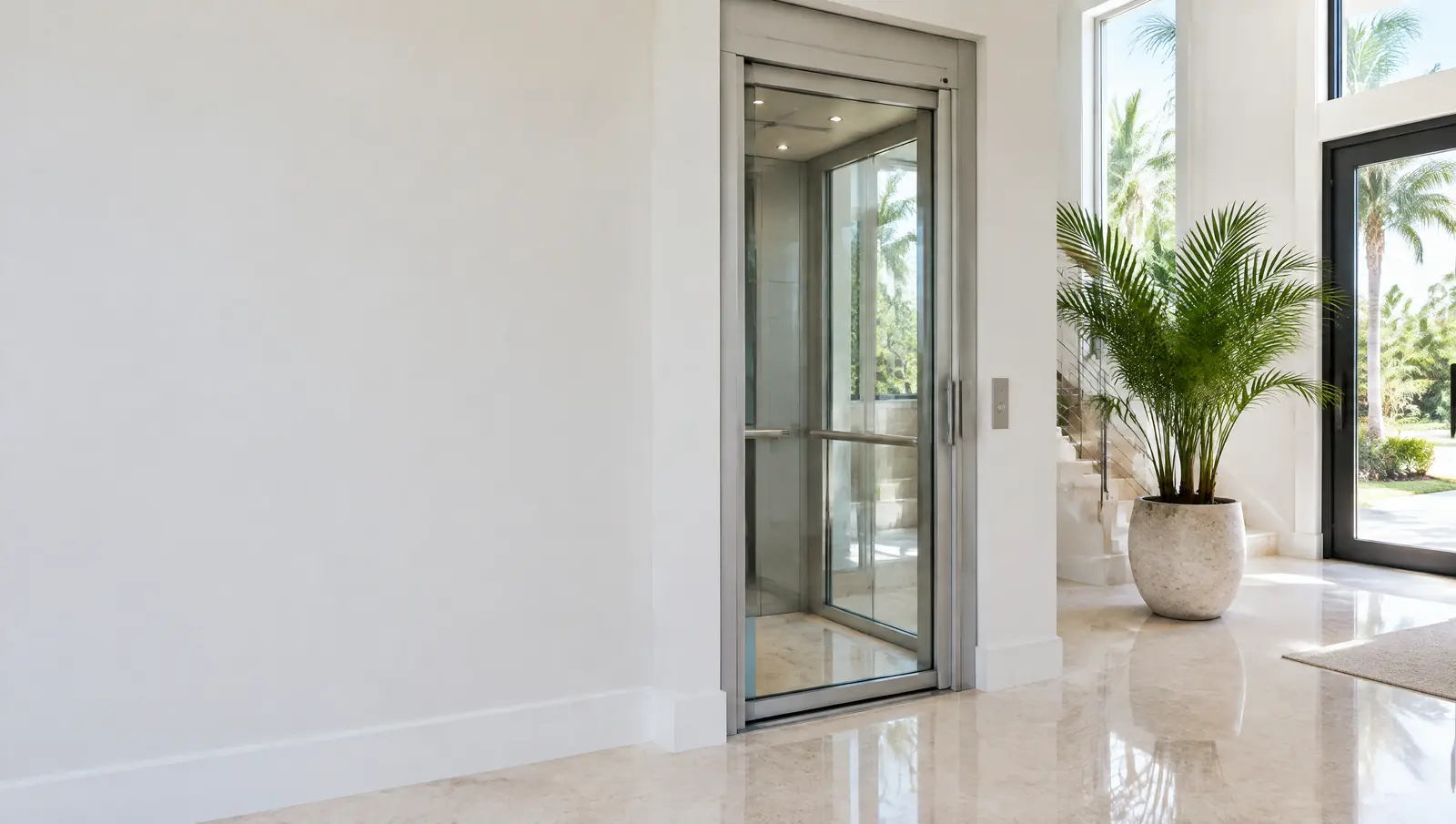
Home elevators in Florida
Reach every floor of your home again, safely and without the stairs.
Free home lift quote
Tell us a little about the home and who it is for. We will call you back to talk it through and arrange a free visit to measure.
We help Florida families choose, plan and install a residential elevator, from compact through-floor lifts to full hoistway elevators. Every quote comes after a free visit to measure the space.
- Free in-home consultation, no obligation
- Home elevators, stair lifts and platform lifts
- Miami-Dade, Broward, Palm Beach, Tampa Bay and Naples
The short answer
A home elevator usually costs $35,000 to $60,000 installed, with a national average of about $50,000; simple cable-driven units can start near $15,000 and concealed custom cabs can reach $100,000. The right type for your home depends on the space you have, how many floors it must serve and whether there is room for a shaft.
Last updated
Is a home elevator right for your home?
A home elevator makes most sense when the stairs are the only thing keeping someone from living on every floor of their home, or when a wheelchair or walker needs to go upstairs too. A stair lift is cheaper, but it only carries a seated rider and nothing else.
It is worth a look after a fall, after a new diagnosis, or when you are planning a home you want to stay in for the long run.
- Two or more floors you want to keep using
- A wheelchair, walker or scooter that needs to travel with you
- A closet, corner or stacked space of about 3 by 4 feet or more on each floor
- A raised coastal home with living space above the parking level
Typical projects and prices
Fixr's national data puts a two-storey pneumatic installation at $38,000 to $55,000, a three-storey at $48,000 to $62,000 and a four-storey at $55,000 to $70,250. On average, each extra floor adds about $10,000.
Most residential cabs carry one or two people. Many smaller pneumatic models are sized for one rider in a wheelchair and have weight limits of 450 to 500 pounds.
Which type of home elevator should you choose?
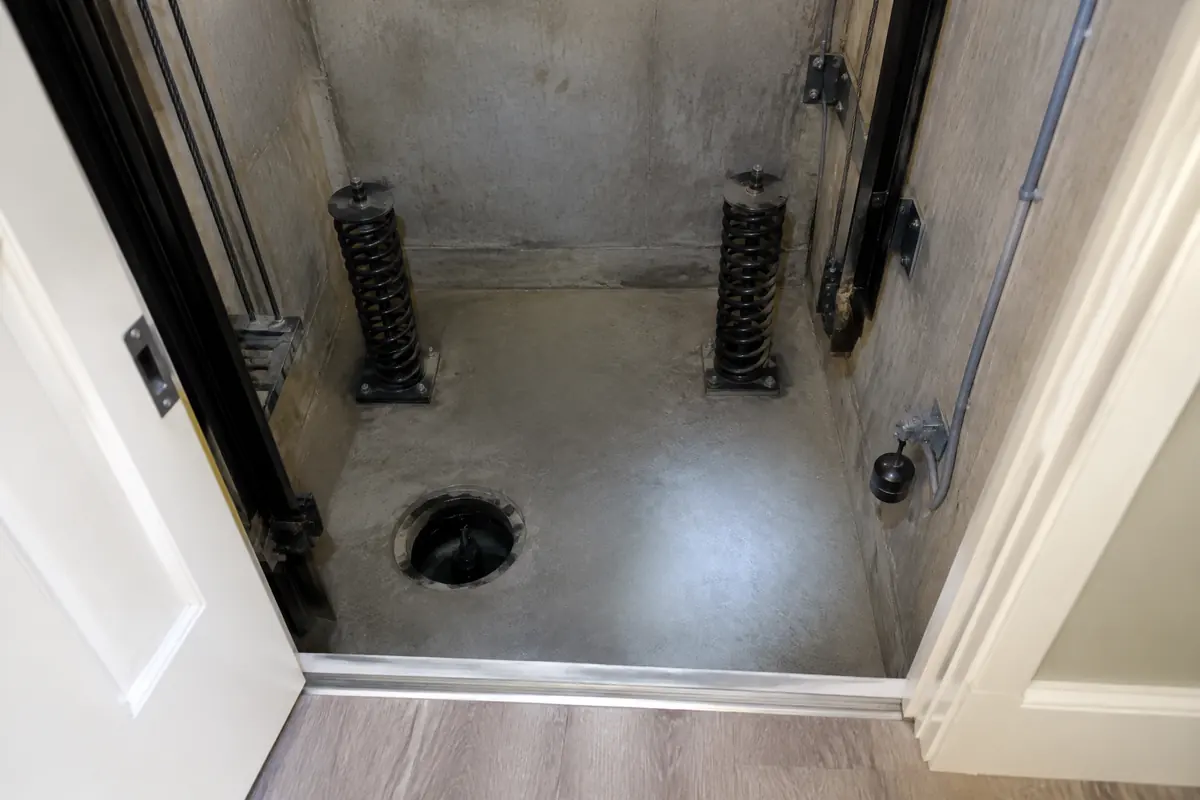
Hydraulic and pneumatic elevators are the two types most often installed in homes. Hydraulic and cable or traction elevators need a shaft and room for machinery, so they suit new builds and larger retrofits. Pneumatic and shaftless models need less building work and fit more existing homes.
We help you weigh the options at the first visit, starting with the space and the person who will ride it most.[1]
Do home elevators in Florida need a state permit?
Usually not from the state. Florida's elevator law lists elevators, stairway chairlifts and wheelchair lifts in private residences as equipment it does not cover, and the state elevator bureau says conveyances serving only one family residence do not need a permit from it. Your city or county building department can still require building and electrical permits, and Miami-Dade charges $64.38 per residential elevator on its mechanical fee schedule.
One Florida rule does apply inside homes: the Max Grablin Act sets door gap limits for every new home elevator. Ask any installer to show you how their design meets it.[2][3][4]
What about hurricanes and flooding?
FEMA says a float switch, or a system that gives the same level of safety, is required under ASME A17.1 for any elevator whose cab could descend below the base flood elevation during a flood, and that controls and hydraulic pumps should sit above that level when possible. If your home is in a flood zone, plan this from the first drawing.[5]
| Drive type | Typical installed cost | Good to know |
|---|---|---|
| Cable driven | $15,000 to $35,000 | Lowest starting price; needs a shaft |
| Hydraulic | $22,000 to $53,000 | Needs a shaft and machine space |
| Geared traction | $25,000 to $38,000 | Needs a shaft |
| Chain driven | $27,000 to $62,000 | Durable but louder |
| Gearless traction | $29,000 to $55,000 | Compact machine |
| Pneumatic (vacuum) | $35,000 to $60,000 | No pit or machine room; visible tube |
Home elevators services
Home elevator installation
From the first measure to the final ride: how a home elevator installation works in Florida and what it costs.
Pneumatic vacuum elevators
Clear-tube vacuum elevators that need no pit or machine room, a popular choice for existing Florida homes.
Hydraulic home elevators
Smooth, quiet hydraulic elevators with a full-size cab, best planned into a new build or a larger remodel.
Cable and traction elevators
Cable-drum and traction home elevators: the lowest starting prices for a full cab, best planned into new construction.
Shaftless through-floor lifts
Compact elevators that travel through a hole in the floor, with no shaft to build and installs in days.
Outdoor elevators
Exterior elevator towers and lifts for raised and coastal Florida homes, built for wind, salt and flood risk.
Elevators for existing homes
Adding an elevator to the home you already live in: where it can go, what it costs and how much building work it takes.
Home elevator repair and service
Repairs, safety checks and yearly service plans for residential elevators already in your home.
Residential dumbwaiters
Small goods lifts that carry groceries, laundry and bags between floors so nobody has to carry them on the stairs.
Frequently asked questions
How much does a home elevator cost in Florida?
Most home elevators cost $35,000 to $60,000 installed, based on national Fixr data, with an average near $50,000. Florida prices follow the same drivers: number of floors, the drive type, finishes and how much building work the shaft needs. We give a written price after a free home visit.
Does a home elevator add value to a house?
The IRS says elevators generally add value to a house, which is why only part of the cost may count as a medical expense on a tax return. Talk to a tax professional before you rely on any deduction.
Can you put an elevator in an existing home?
Yes, in many homes. Pneumatic and shaftless models need the least building work. A hydraulic retrofit needs a shaft and machine space, and Fixr puts that at $40,000 or more.
How long does it take to install a home elevator?
Fixr says shaftless models can usually be installed in one to three days, while an elevator that needs a shaft and machine room can take three to four weeks once the space is ready.
Does Florida license home elevator installers?
Florida's elevator law does not cover elevators inside private homes, so there is no state elevator licence that applies to every home installer. Ask any installer for its state registration if it holds one, proof of insurance and its plan for local permits.
Sources
- Home Elevator Cost (national cost guide, updated 31 Jan 2025), Fixr. Accessed October 28, 2026.
- Florida Statutes Chapter 399, Elevator Safety, Florida Legislature. Accessed October 28, 2026.
- Elevator Safety: Applying for Elevator Permits, Florida DBPR, Bureau of Elevator Safety. Accessed October 28, 2026.
- Mechanical permit fee schedule (Category 52, residential elevator), Miami-Dade County. Accessed October 28, 2026.
- NFIP Technical Bulletin 4: Elevator Installation for Buildings Located in Special Flood Hazard Areas (June 2019), FEMA. Accessed October 28, 2026.
- Publication 502 (2025), Medical and Dental Expenses, Internal Revenue Service. Accessed October 28, 2026.
Get a free quote
Tell us about your project and we will get back to you fast.