
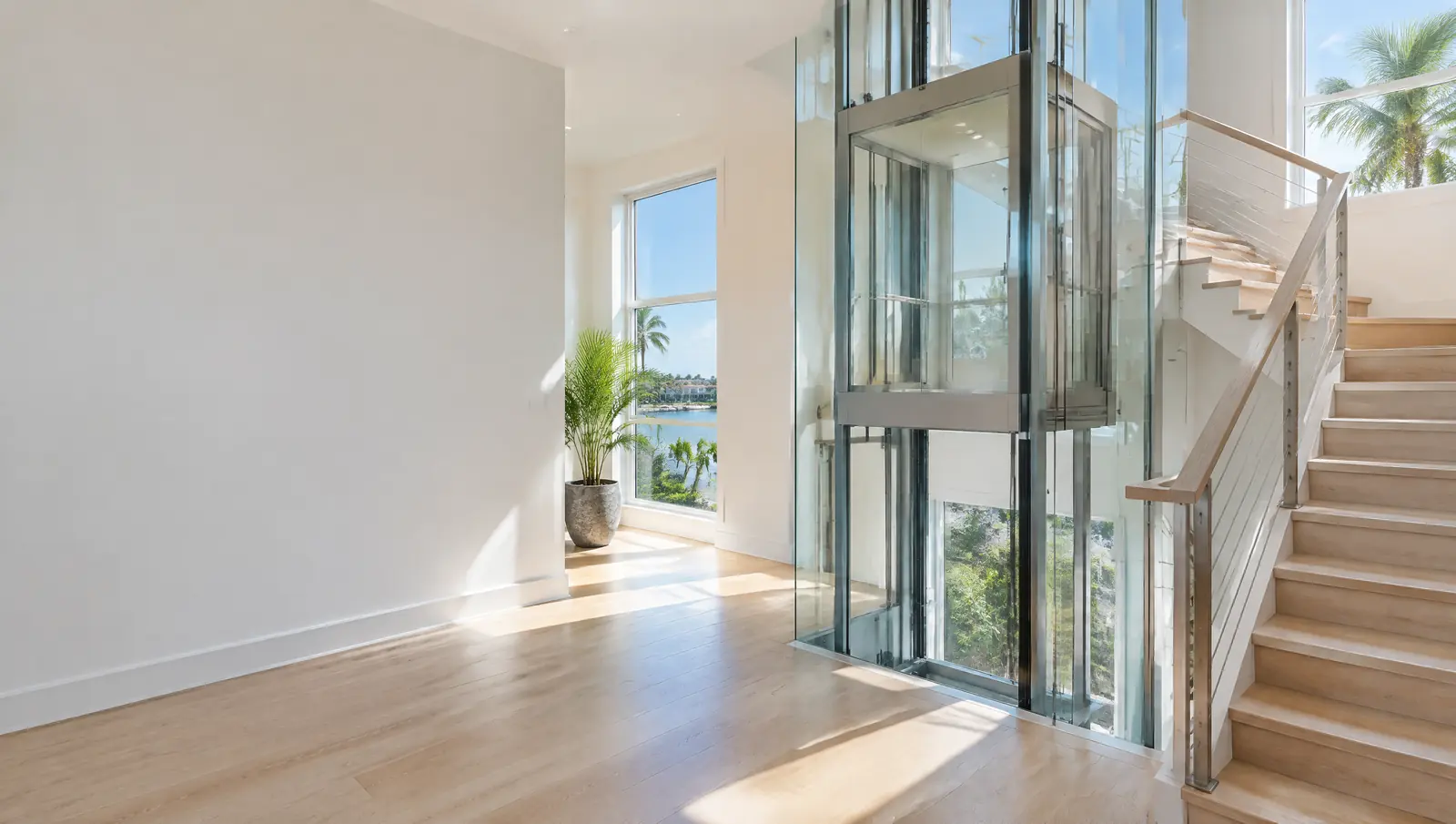
Cable and traction home elevators
Full-size cabs with compact machinery, often the best value in a new build.
Free home lift quote
Tell us a little about the home and who it is for. We will call you back to talk it through and arrange a free visit to measure.
Cable-drum and traction elevators move the cab with steel cables or belts. They need a shaft, but many need little or no separate machine room.
- Free in-home consultation, no obligation
- Home elevators, stair lifts and platform lifts
- Miami-Dade, Broward, Palm Beach, Tampa Bay and Naples
The short answer
A cable-driven home elevator costs about $15,000 to $35,000 installed, and geared or gearless traction models cost about $25,000 to $55,000, according to Fixr's national data. Machine-room-less traction elevators average around $45,000, compared with at least $60,000 for models with a machine room.
Last updated
Who this is for
These drives suit new construction and large remodels where a shaft can be planned from the start. Fixr notes that cable-driven elevators tend to cost less than hydraulic units in a new home, about $25,000 compared with $40,000.
Typical project sizes
Fixr gives the installed ranges below for the four cable and traction drive types, plus an average of $45,000 for machine-room-less (MRL) elevators.
What is the difference between cable, chain and traction drives?
Cable-drum elevators wind a cable onto a drum. Chain-driven models use a chain, which Fixr describes as stronger and longer-lasting but loud. Traction elevators use a motor and steel cables or belts over a sheave, and gearless versions keep the machine compact. FEMA notes that traction elevators lift the cab using steel cables and a traction motor.[1][2]
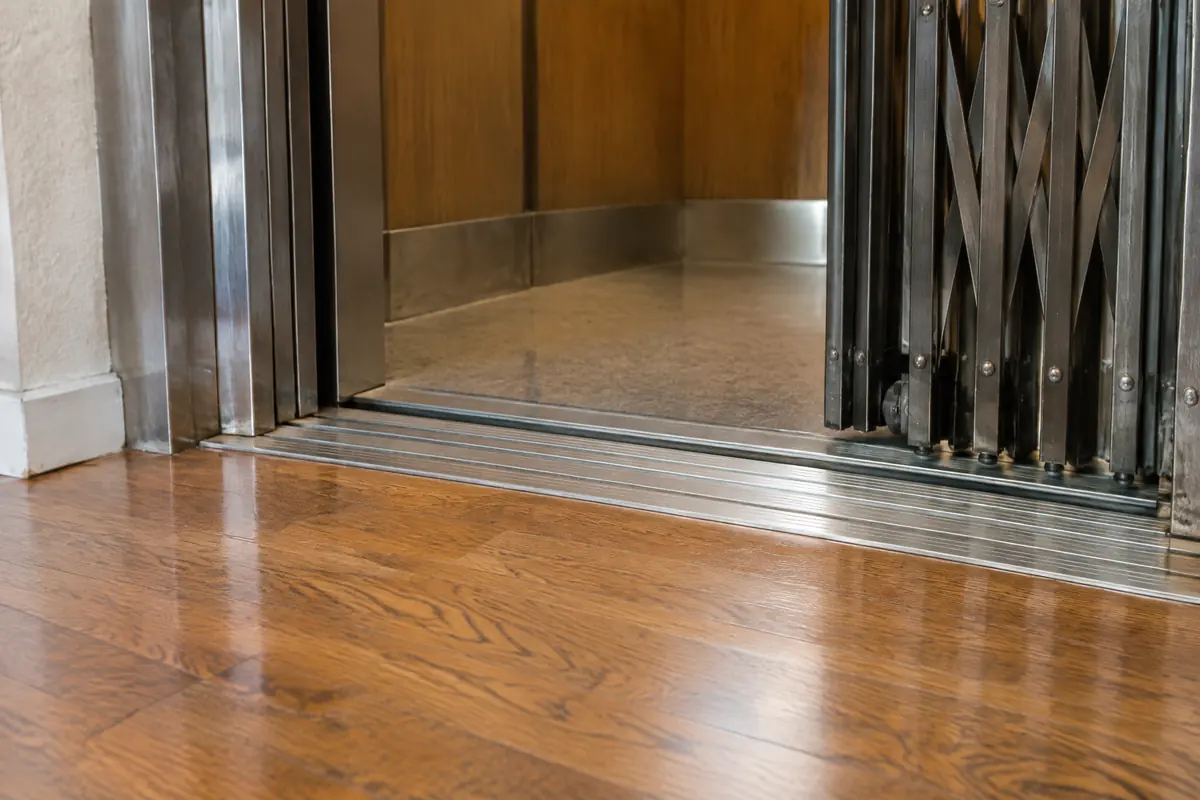
Machine room or machine-room-less?
An MRL unit fits the machine inside the shaft and needs fewer working parts. Fixr puts the average MRL cost at $45,000, against at least $60,000 for a machine room model. In a home, losing the machine room often frees a closet.[1]
| Type | Typical installed cost |
|---|---|
| Cable driven | $15,000 to $35,000 |
| Geared traction | $25,000 to $38,000 |
| Chain driven | $27,000 to $62,000 |
| Gearless traction | $29,000 to $55,000 |
| Machine-room-less (average) | $45,000 |
| With a machine room | $60,000 or more |
Frequently asked questions
Which drive type is cheapest?
Cable-driven elevators have the lowest starting price in Fixr's data, from about $15,000 installed, but they still need a shaft.
Is a chain-driven elevator a good idea at home?
Fixr describes chain drives as durable but loud, which makes them unsuitable for most homes.
Can a traction elevator go in an existing home?
Yes, if you can build a shaft. A pneumatic or shaftless model is usually easier in an existing home, so we compare both at the home visit.
Sources
- Home Elevator Cost (national cost guide, updated 31 Jan 2025), Fixr. Accessed October 28, 2026.
- NFIP Technical Bulletin 4: Elevator Installation for Buildings Located in Special Flood Hazard Areas (June 2019), FEMA. Accessed October 28, 2026.
- Florida Statutes Chapter 399, Elevator Safety, Florida Legislature. Accessed October 28, 2026.
- Elevator Safety: Applying for Elevator Permits, Florida DBPR, Bureau of Elevator Safety. Accessed October 28, 2026.
- Mechanical permit fee schedule (Category 52, residential elevator), Miami-Dade County. Accessed October 28, 2026.
- Publication 502 (2025), Medical and Dental Expenses, Internal Revenue Service. Accessed October 28, 2026.
Get a free quote
Tell us about your project and we will get back to you fast.