
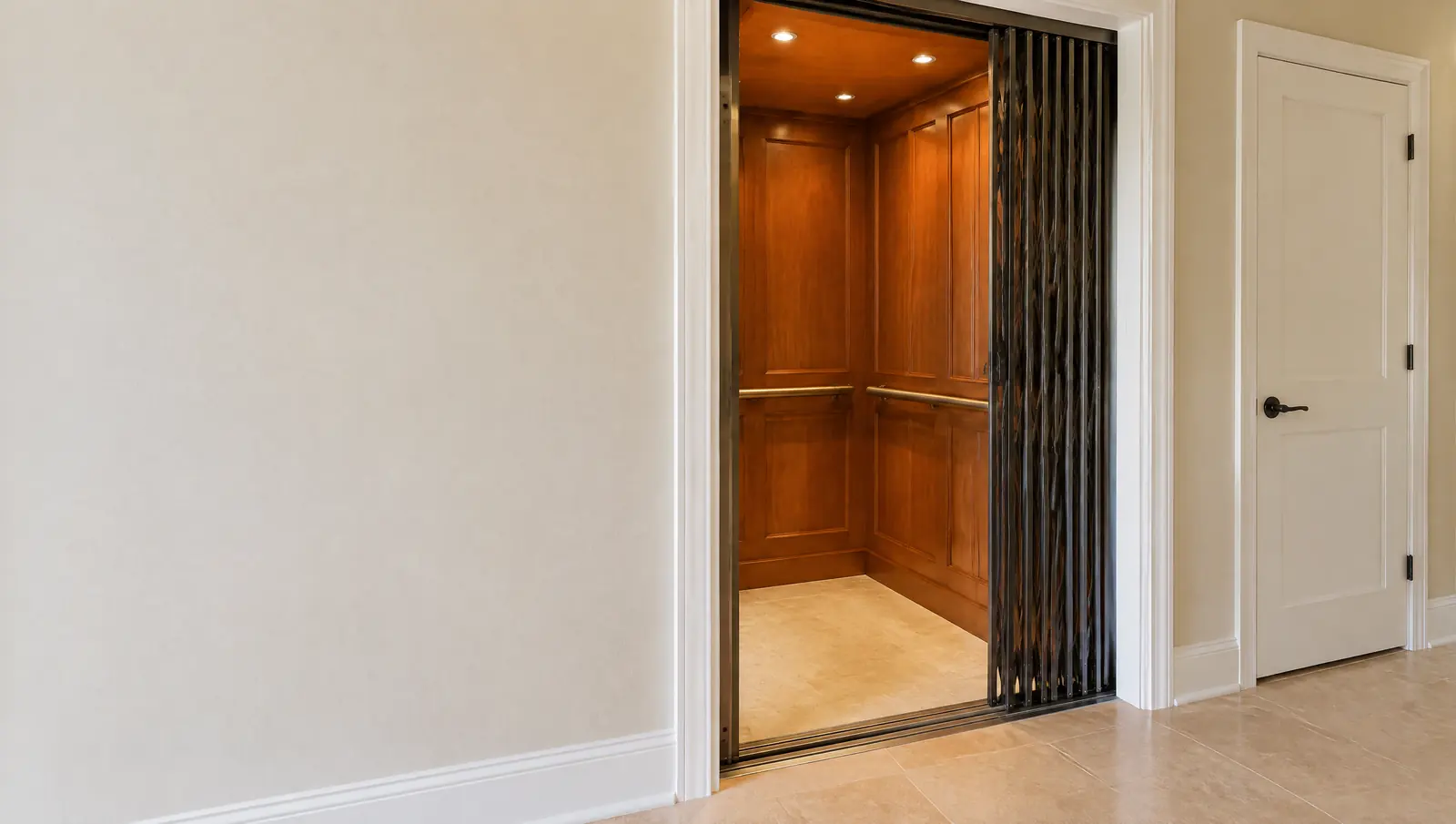
Florida's Max Grablin Act says that on every new elevator in a private residence, the gap between the hoistway face of the hall door and the landing sill may not exceed 3/4 inch for swinging doors or 2 1/4 inches for sliding doors, and the space between the hall door and the car door or gate must reject a 4 inch sphere. These limits stop a child from being trapped between the doors.
If you have children in the home
If you have a home elevator and young children live in or visit the home, have the door gaps measured by a technician. Do not let children play near or ride the elevator alone. This page explains the rule; it is not a safety inspection.
Why do home elevator door gaps matter?
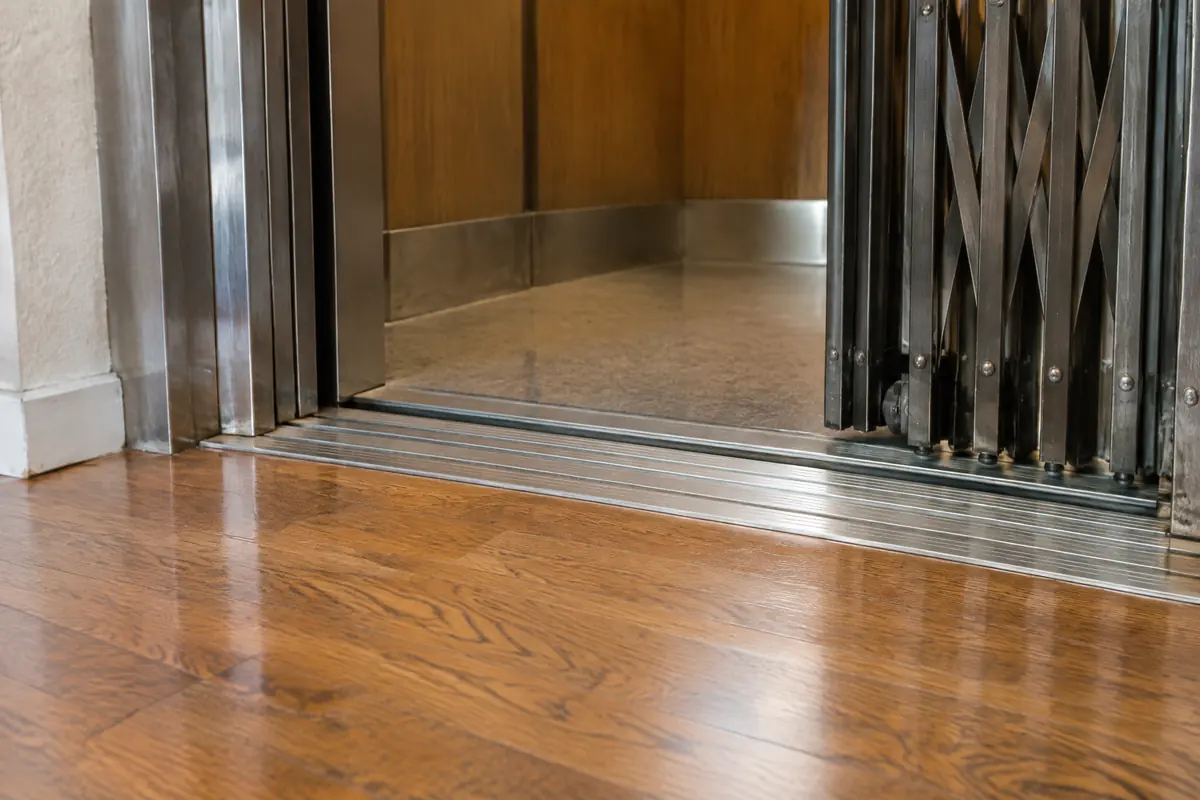
When the hall door is closed, there can be a space between it and the cab's own door or gate. The Florida House analysis of the law explains that children have fitted into that space, and that when the elevator is called to another floor, the child can be carried along and crushed.[2] In January 2015, 12-year-old Maxwell Erik "Max" Grablin was killed this way in his family's home in Bradenton.[2]
What does the Max Grablin Act require?
Section 399.031, cited as the Maxwell Erik "Max" Grablin Act, sets these rules for elevators installed in a private residence:[1]
| Rule | Limit |
|---|---|
| Gap from hoistway face of hall door to landing sill, swinging doors | No more than 3/4 inch |
| Same gap, sliding doors | No more than 2 1/4 inches |
| Space between swinging hall door and folding car door or car gate | Must reject a 4 inch sphere at all points |
| Space with powered sliding doors | No more than 4 inches at the leading edge |
| Sliding or folding car doors and gates | Withstand 75 pounds of force; deflection no more than 3/4 inch |
The law also says that during normal operation the controller must monitor the hall door locks. If a landing lock is open while the car is not at that landing, the controller must cut power to the motor and brake, and the car must not restart until the owner checks for obstructions above and below the car and resets it with a master key; a visual indicator must show at all landings until then.[1] Section 399.031(4) says the section applies to all new elevators in a private residence.[1]
Is this in the building code too?
Yes. The Florida Building Code, Residential (2023), section R321.4, repeats the clearance requirements for elevators inside a private residence.[3] The 2017 House analysis notes the Florida Building Commission was required to adopt the Act's requirements into the code.[2]
How do you check an older elevator?
- Ask a qualified elevator technician to measure the gap at every landing with the doors closed.
- Ask whether the space between the hall door and the car gate would reject a 4 inch sphere.
- If not, ask about a space guard fitted to the hall door, and whether the door locks are monitored.
- Keep the report with your elevator papers.
What this means for you
For a new elevator, ask the installer to show in writing how the design meets s. 399.031. For an existing one, book a measured check, especially if children live in or visit the home.
Find a pro in your area
Enter your ZIP code and we will open the quote form for you. It takes about a minute.
Frequently asked questions
What is the 3/4 rule for elevators?
In Florida, the gap between the hoistway face of a swinging hall door and the landing sill on a new home elevator may not exceed 3/4 inch. For sliding doors the limit is 2 1/4 inches.
Does the law apply to my older elevator?
Section 399.031 applies to all new elevators in a private residence. Older elevators may not meet it. A technician can measure the gaps and fit a space guard if needed.
Why was the law passed?
The Florida House analysis explains that in January 2015 a 12-year-old boy, Max Grablin, was killed after becoming trapped in the elevator shaft of his home in Bradenton.
Sources
- Florida Statutes Chapter 399, Elevator Safety, Florida Legislature. Accessed October 28, 2026.
- Final Bill Analysis, CS/HB 1215 (2017), residential elevators, Florida House of Representatives. Accessed October 28, 2026.
- Florida Building Code, Residential, 8th Edition (2023), Section R321 Elevators and Platform Lifts (UpCodes copy), UpCodes. Accessed October 27, 2026.