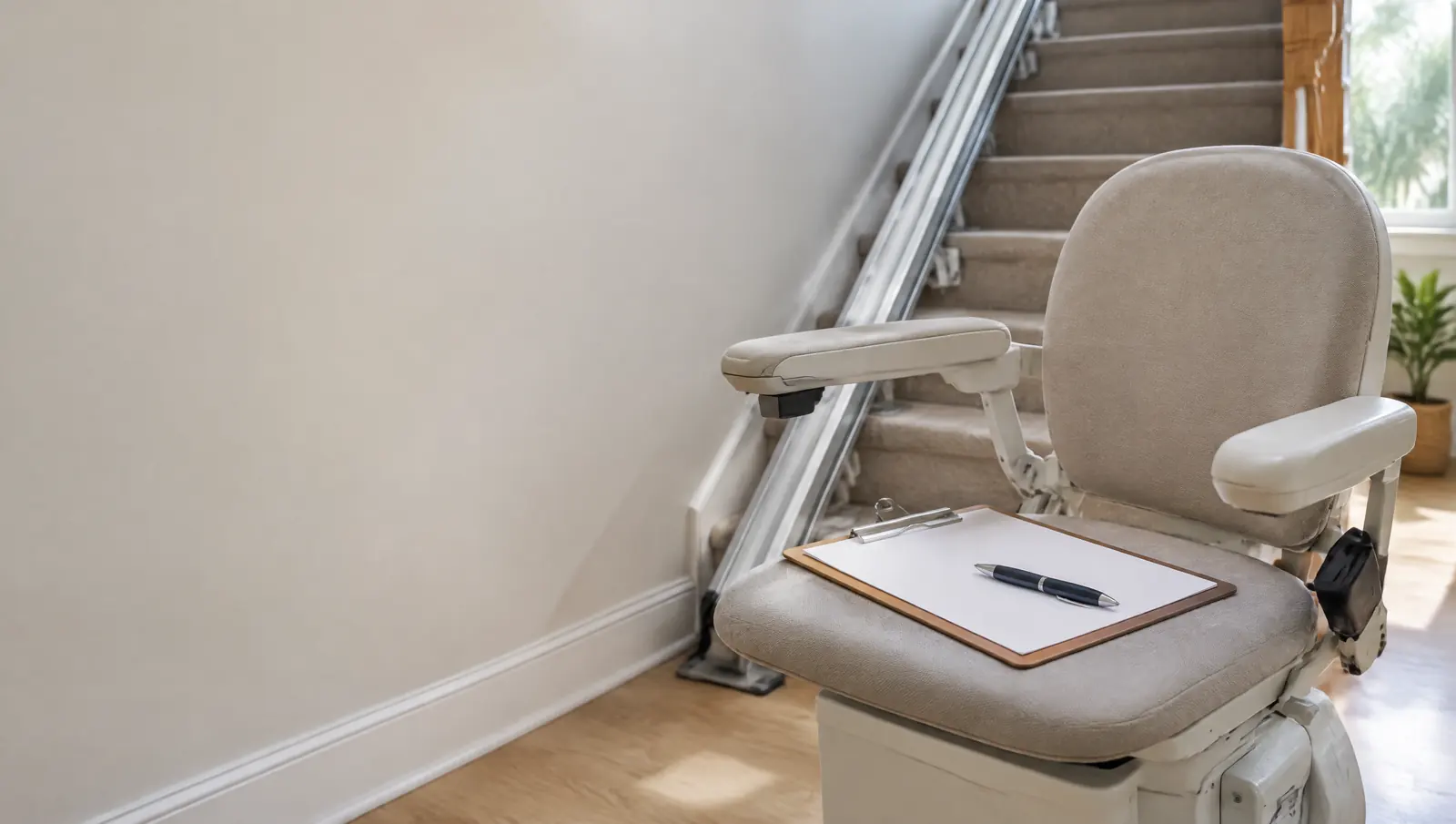
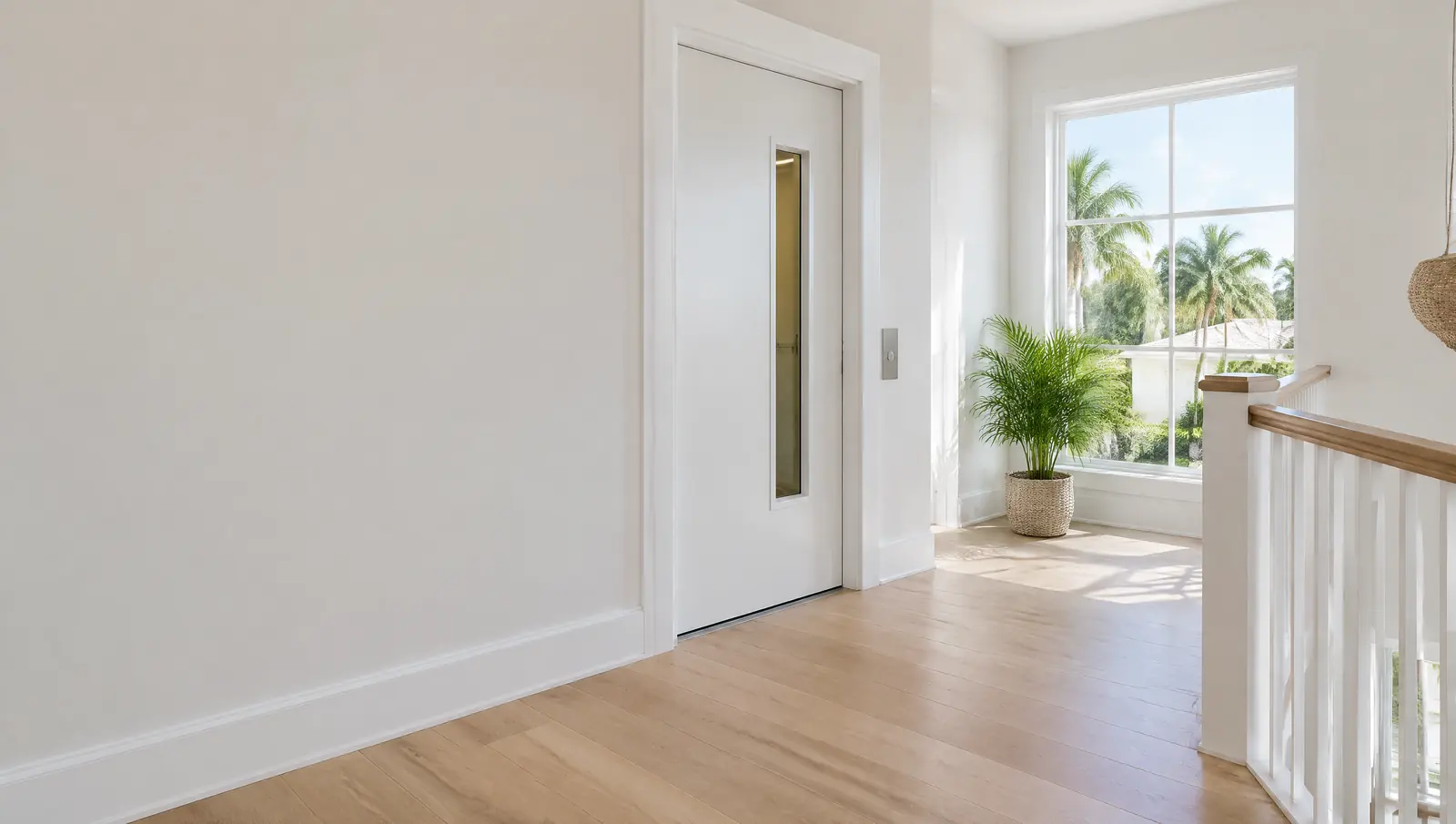
Florida's Elevator Safety Act, Chapter 399, does not cover elevators, stairway chairlifts or wheelchair lifts located in private residences, and the state elevator bureau does not permit or inspect them. One state rule does apply in homes: the Max Grablin Act door gap limits for every new home elevator. Local building and electrical permits still apply, and Miami-Dade, for example, lists a residential elevator permit line at $64.38.
Does Florida regulate elevators in private homes?
Mostly not. Chapter 399 lists, among equipment not covered by the chapter, "elevators, inclined stairway chairlifts, and inclined or vertical wheelchair lifts located in private residences".[1] The state's Bureau of Elevator Safety says conveyances located in and serving only one family residence are not regulated by the division and do not need a permit from it.[2] The law also says these home lifts do not need a state certificate of operation.[1]
What counts as a private residence?
Florida defines a private residence as a separate dwelling, or a separate apartment in a multiple dwelling, occupied by members of a single-family unit.[1] A lift inside one family's condo unit counts. A lift in a lobby, pool deck or other shared area does not, and follows the state rules for regulated conveyances, including a permit applied for by a registered elevator company.[2]
Which Florida rule does apply inside homes?
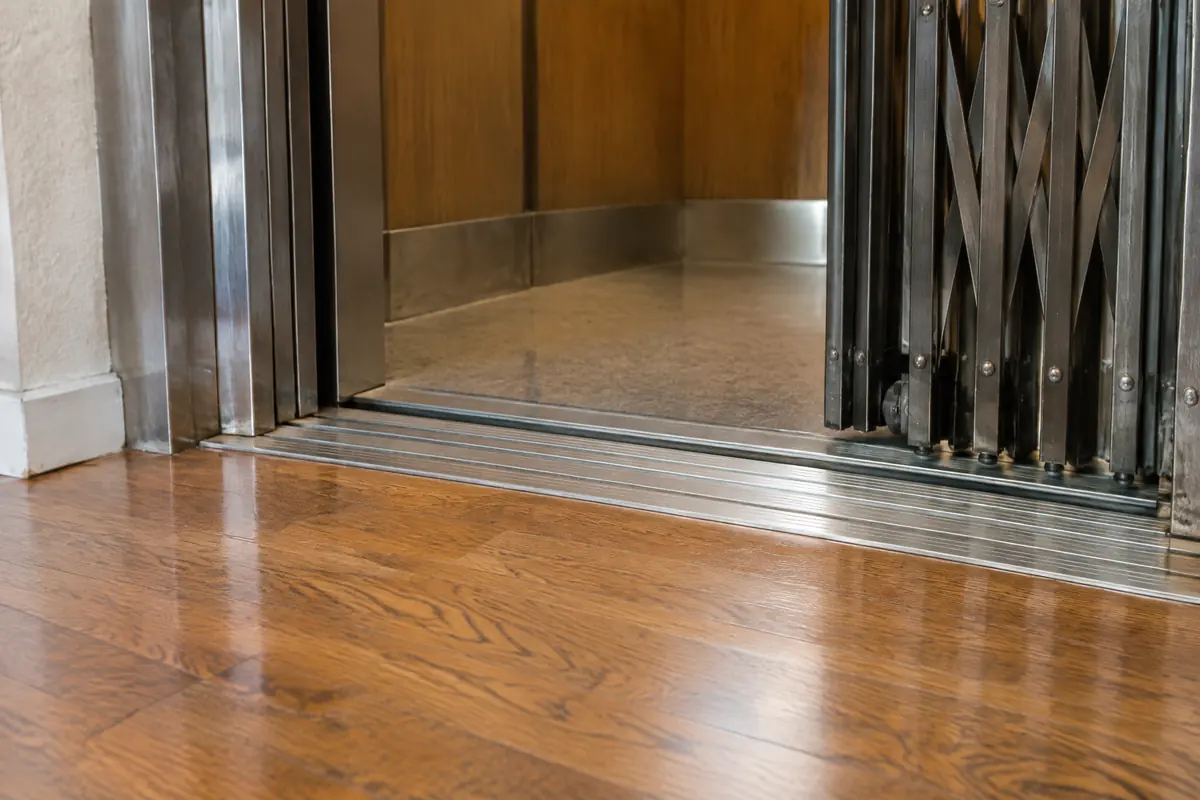
Section 399.031, the Maxwell Erik "Max" Grablin Act, applies to all new elevators in a private residence.[1] It limits door gaps and sets strength tests for car doors and gates. The Florida House analysis of the 2017 update explains it followed the death of a 12-year-old in a home elevator in Bradenton in January 2015.[6] Our door gap safety guide explains the measurements.
What does the building code require?
The Florida Building Code, Residential (8th edition, 2023), section R321, says private residence elevators shall comply with ASME A17.1/CSA B44 and platform lifts with ASME A18.1.[5] We read this section on a copy published by UpCodes, because the official code site was not reachable when we checked.
Which local permits apply?
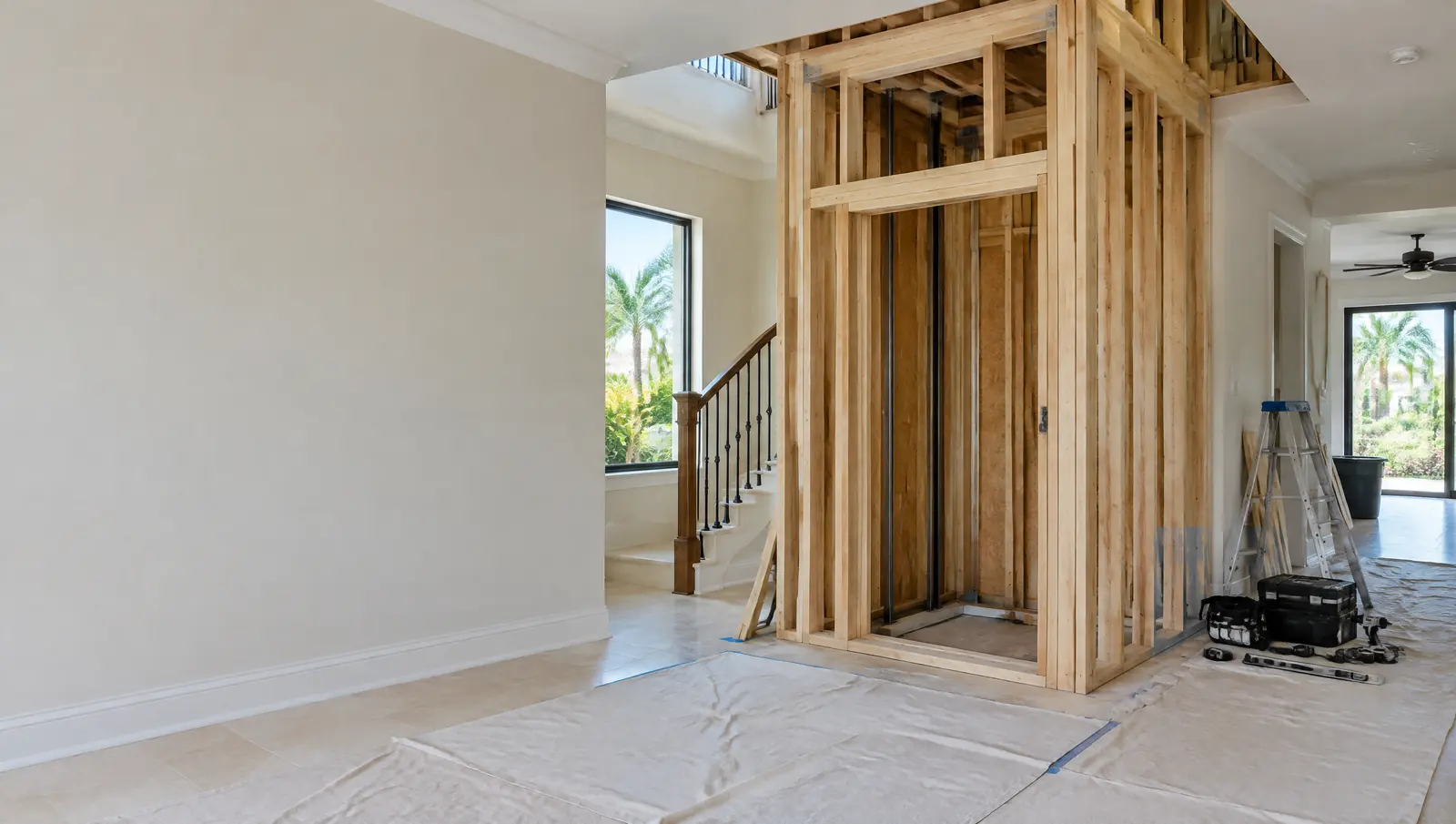
Your city or county building department decides. Examples from South Florida:
| Place | What we found |
|---|---|
| Miami-Dade County | Mechanical fee schedule: residential elevator (private or individual), $64.38 per elevator |
| Miami-Dade Office of Elevator Safety | Install application lists inclined stairway chairlifts and wheelchair lifts as device classes |
| Miami Beach | City Elevator Safety Division has jurisdiction; permits go to registered elevator companies, not owners |
| Palm Beach County | Not a contracted jurisdiction; the state bureau regulates covered elevators directly |
Five local jurisdictions handle elevator regulation under contract with the state: the City of Miami, Miami Beach, Miami-Dade, Broward and the Central Florida Tourism Oversight District.[4]
Who is allowed to install a home elevator?
The state issues registrations to elevator companies and licences to certified elevator technicians, and only registered elevator companies can apply for state permits.[3][2] Because home lifts fall outside the chapter, many home lift dealers are not state-registered, and we do not say whether the law requires them to be. Ask any installer for its state registration if it holds one, proof of insurance and its plan for local permits. Our questions to ask before you hire has a checklist. General information only, not medical, legal or financial advice.
What this means for you
There is no state permit or inspection for a lift in your own home, so you set the safety bar. Ask for the local permit plan in writing, make sure any elevator meets the Max Grablin door gap rules, and book a yearly service.
Find a pro in your area
Enter your ZIP code and we will open the quote form for you. It takes about a minute.
Frequently asked questions
Does Florida inspect home elevators?
No. Home elevators and lifts are not covered by Chapter 399 and do not need a state certificate of operation, so there is no state inspection. Yearly service is up to the owner.
Do I need a permit to install a stair lift in Florida?
Not from the state. Your city or county may still require an electrical or building permit, so your installer should check with your local building department.
What is the 3/4 rule for elevators?
Under Florida's Max Grablin Act, the gap between the hoistway face of the hall door and the landing sill of a new home elevator may not exceed 3/4 inch for swinging doors, or 2 1/4 inches for sliding doors.
Does an elevator in a condo unit count as a private residence elevator?
Yes, if it is inside a separate apartment occupied by one family. Lifts serving the building's shared areas are covered by the state law.
Sources
- Florida Statutes Chapter 399, Elevator Safety, Florida Legislature. Accessed October 28, 2026.
- Elevator Safety: Applying for Elevator Permits, Florida DBPR, Bureau of Elevator Safety. Accessed October 28, 2026.
- Elevator Safety: Professional Licenses, Florida DBPR, Bureau of Elevator Safety. Accessed October 28, 2026.
- Elevator Safety: Contracted Jurisdictions, Florida DBPR, Bureau of Elevator Safety. Accessed October 28, 2026.
- Florida Building Code, Residential, 8th Edition (2023), Section R321 Elevators and Platform Lifts (UpCodes copy), UpCodes. Accessed October 27, 2026.
- Final Bill Analysis, CS/HB 1215 (2017), residential elevators, Florida House of Representatives. Accessed October 28, 2026.
- Mechanical permit fee schedule (Category 52, residential elevator), Miami-Dade County. Accessed October 28, 2026.
- Office of Elevator Safety, Application for Permit to Install an Elevator (OES-7015), Miami-Dade County. Accessed October 27, 2026.
- Public Works, Elevator Safety Division, City of Miami Beach. Accessed October 28, 2026.
- Elevator Permit, City of Miami Beach. Accessed October 27, 2026.