
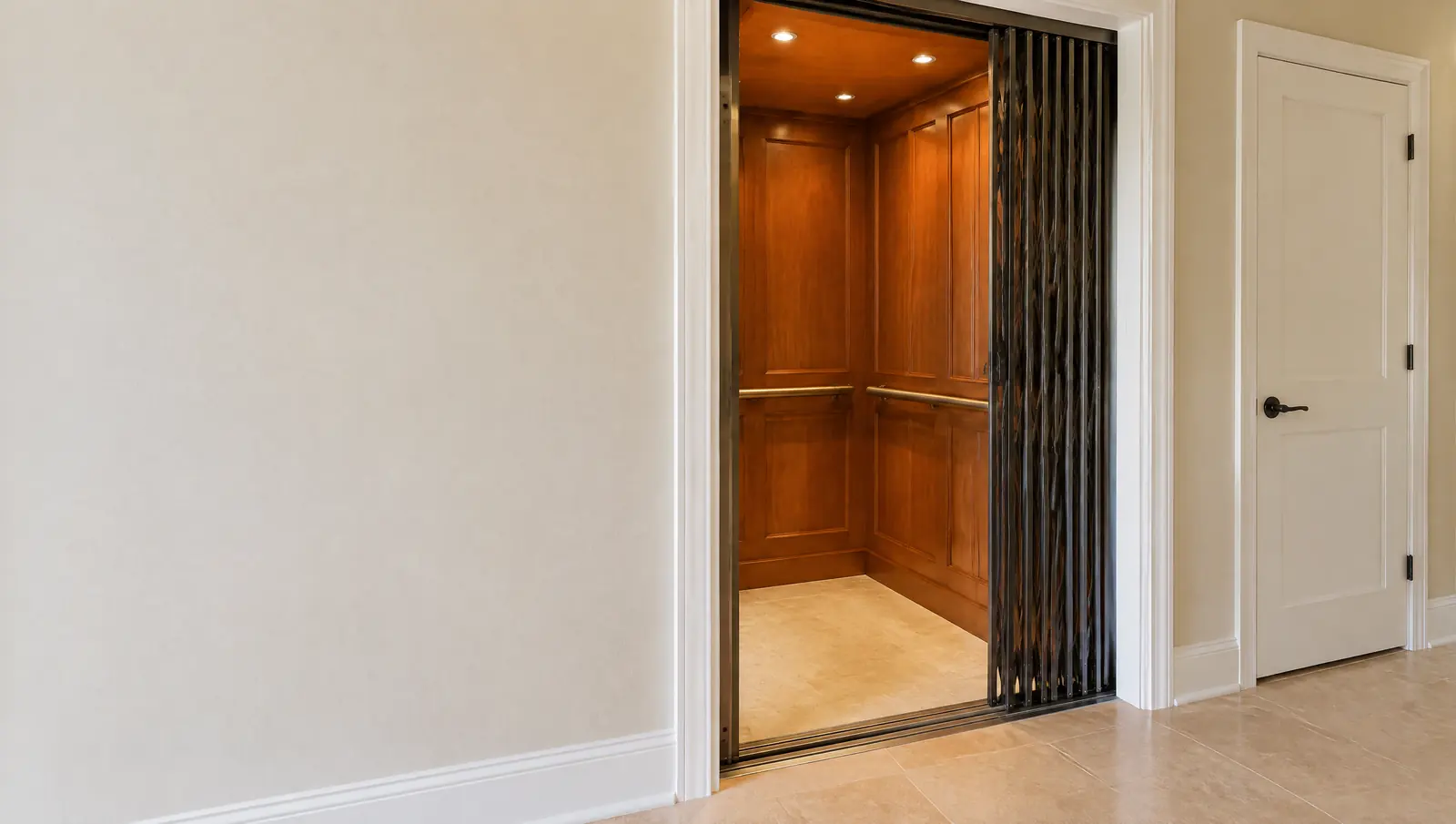
Hydraulic home elevators in Miami
Planned around Miami-Dade permits, flood levels and condo rules.
Free home lift quote
Tell us a little about the home and who it is for. We will call you back to talk it through and arrange a free visit to measure.
Hydraulic elevators lift the cab with a piston. They need a shaft and space for the pump and controls, and in return give you a larger cab with room for a wheelchair and a companion.
- Free in-home consultation, no obligation
- Home elevators, stair lifts and platform lifts
- Miami-Dade, Broward, Palm Beach, Tampa Bay and Naples
The short answer
A hydraulic home elevator typically costs $22,000 to $53,000 installed, based on Fixr's national data, and needs room for a pump and tank. FEMA expects a float switch or equal system on any elevator whose cab could descend below the base flood elevation, which matters for Miami homes near the bay, the beaches and the canals.
Last updated
Who this is for
Hydraulic elevators suit new homes, major remodels and homes with stacked closets that can become a shaft. They are a good fit when a wheelchair user and a carer need to ride together.
Typical project sizes
Fixr says a hydraulic retrofit costs at least $40,000 and can reach $100,000 when extra construction is needed to fit and conceal it. In new construction Fixr gives about $40,000 for a hydraulic unit compared with about $25,000 for a cable-driven one.
Do hydraulic home elevators in Miami need a permit?
Florida's elevator law leaves out elevators in private residences, but the county building permit still applies. Miami-Dade's mechanical fee schedule has its own line for a private residential elevator, Category 52, at $64.38 per elevator, and your installer confirms which building and electrical permits go with it.
Miami-Dade, the City of Miami and Miami Beach are state-contracted elevator jurisdictions, so any lift that serves shared condo areas goes through those local offices rather than Tallahassee. Miami Beach runs its own Elevator Safety Division, which issues permits only to registered elevator companies.[6][7][4][8]
Miami houses and hydraulic home elevators
Only about 38 percent of Miami-Dade homes are single-family detached houses, and many in Coral Gables, Coconut Grove and Pinecrest are two-storey homes with turning staircases. Those are the homes where a curved stair lift or a compact elevator usually ends up on the shortlist.
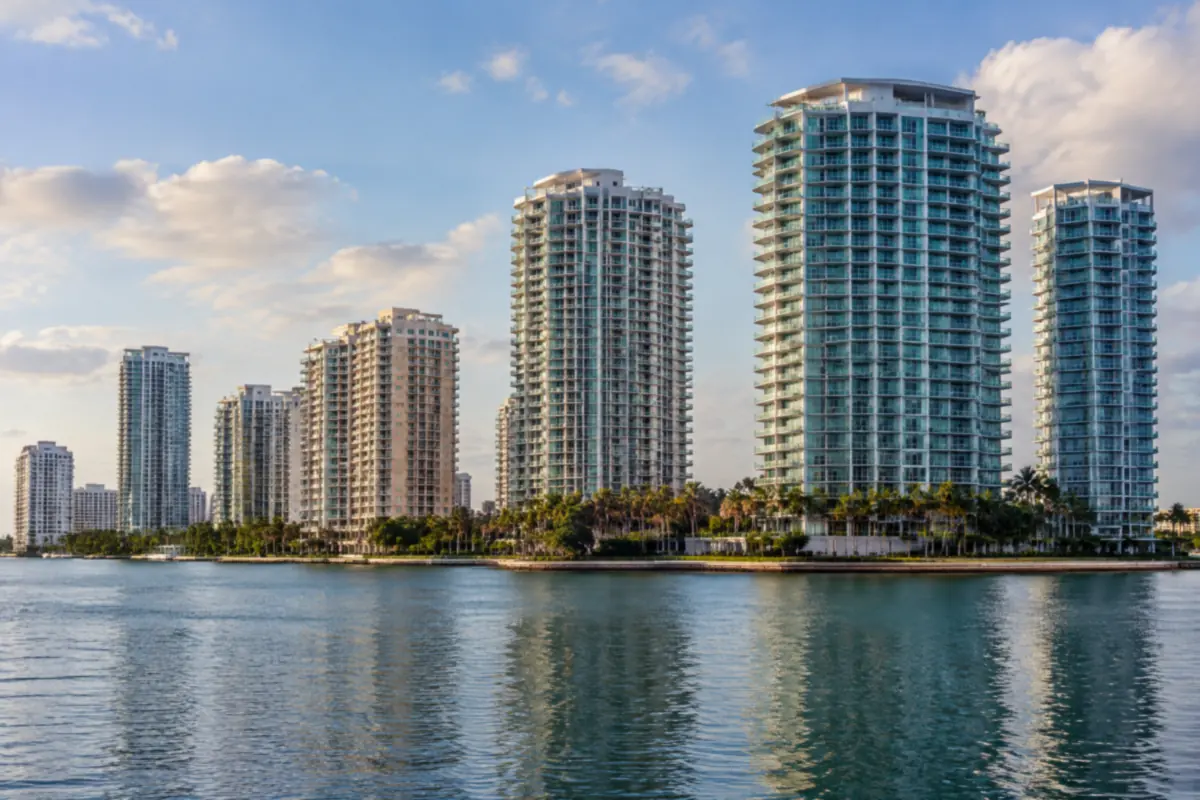
The median owner-occupied home in Miami-Dade is valued at about $547,200. IRS Publication 502 says lifts added for medical reasons usually do not raise a home's value, but elevators generally do, which affects how much of the cost may count as a medical expense.
About 47 percent of Miami-Dade homes were built before 1980, and the median home dates from 1982. Older block homes often have narrow stairs and no obvious shaft space, so the survey checks wall structure, stair width and the electrical panel before a model is chosen.[9][10][11][3]
Help paying for a hydraulic elevator in Miami-Dade
For Florida Medicaid long-term care, Miami-Dade is in Region I, and screening starts with the Alliance for Aging on (305) 670-6500. The programme covers home accessibility adaptations but does not name elevators, so ask the plan before counting on it. Veterans with a qualifying service-connected disability can ask about the VA's Specially Adapted Housing grant, up to $126,526 in fiscal year 2026; the local VA medical center is the Bruce W. Carter VA Medical Center on NW 16th Street.[12][13][14][15][5]
What is different about a home lift in Miami-Dade?
Miami-Dade is one of only two Florida counties in the High Velocity Hurricane Zone, so outdoor lift towers, enclosures and doors must meet the stricter product approvals used there. Homes near the bay, the beaches and canals should check their flood zone, because FEMA expects any elevator that could descend below the base flood elevation to have a float switch or an equal system.
In a condo, Florida law treats a single family's own apartment as a private residence, so a lift inside your unit is a private residence lift. Anything that serves the building's shared areas is not, and follows the state and county elevator rules for public conveyances.[16][2][6]
Permits in Miami
- Miami-Dade County Building (Permitting and Inspection): Building, electrical and mechanical permits in unincorporated Miami-Dade; its fee schedule lists Category 52, residential elevator (private or individual), at $64.38 per elevator.
- Miami-Dade Office of Elevator Safety: A state-contracted elevator jurisdiction. Its permit-to-install form lists inclined stairway chairlifts and inclined and vertical wheelchair lifts as device classes.
- City of Miami Beach Elevator Safety Division: Holds jurisdiction over elevators, wheelchair lifts and related equipment in Miami Beach; permits go to registered elevator companies, not owners.
- City of Miami: Also a state-contracted elevator jurisdiction for the conveyances the state law covers.
Where does the hydraulic equipment go in a flood zone?
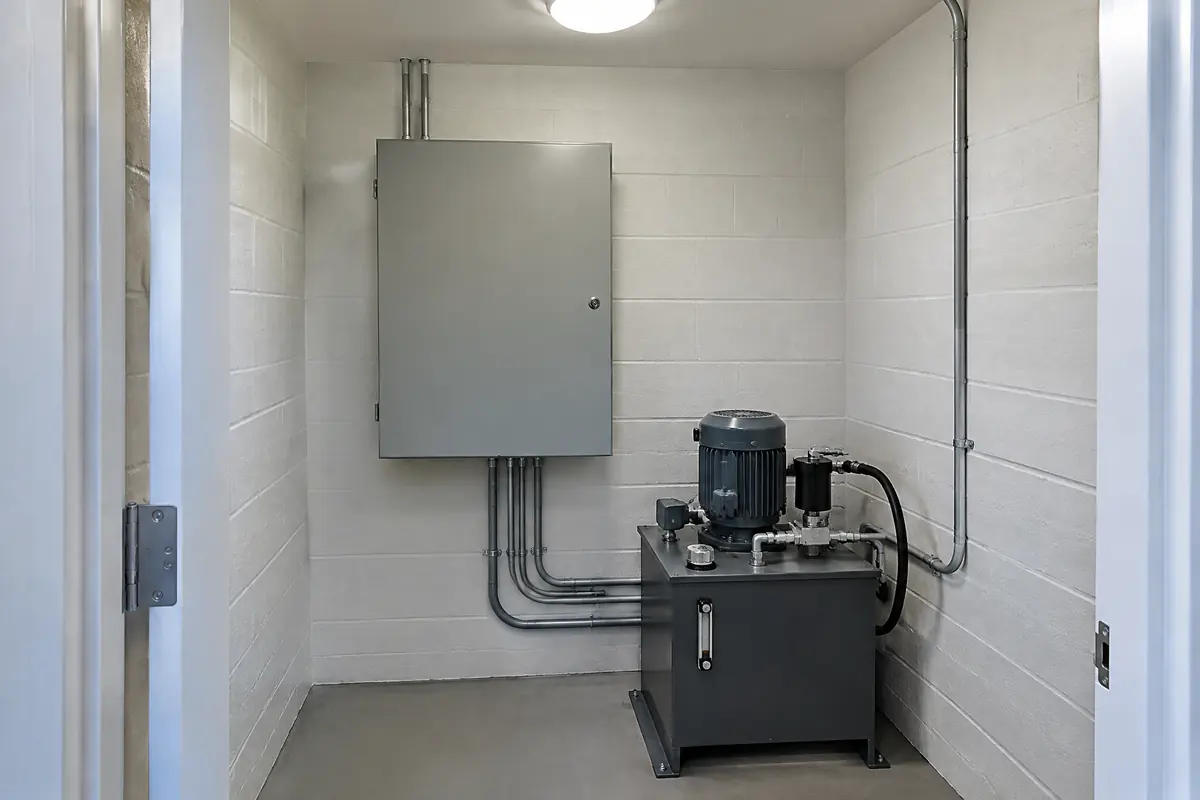
FEMA says electrical controls and hydraulic pumps should be located above the base flood elevation when possible. It also notes that some hydraulic elevators use a battery descent feature that lowers the car to the lowest landing when power fails, and that a float switch should be built into the controller so the car cannot descend into floodwater. In low-lying parts of Florida this shapes where the machine space goes.[2]
Holed or holeless?
FEMA explains that hydraulic elevators can be direct-acting with a piston set into the ground, or holeless. For flood-prone sites it suggests exploring holeless hydraulics, which are typically used in low-rise buildings of two or three floors.[2]
Frequently asked questions
What does a Miami-Dade permit for a hydraulic elevator cost?
Miami-Dade's mechanical fee schedule lists a private residential elevator (Category 52) at $64.38 per elevator. Building and electrical permits and plan fees are separate, and your installer includes them in the quote.
Can I add a hydraulic elevator to my Miami condo?
Inside a two-level unit, sometimes. Florida law treats one family's apartment as a private residence, but you need the association's written approval and a structural check first.
Are most Miami-Dade homes single-family houses?
No. About 38 percent are detached houses; the rest are townhouses, small apartment buildings and condo towers.
Sources
- Home Elevator Cost (national cost guide, updated 31 Jan 2025), Fixr. Accessed October 28, 2026.
- NFIP Technical Bulletin 4: Elevator Installation for Buildings Located in Special Flood Hazard Areas (June 2019), FEMA. Accessed October 28, 2026.
- Year Structure Built, tables B25034 and B25035, American Community Survey 2024 1-year estimates, U.S. Census Bureau via Census Reporter. Accessed October 28, 2026.
- Elevator Safety: Contracted Jurisdictions, Florida DBPR, Bureau of Elevator Safety. Accessed October 28, 2026.
- Miami VA health care locations, U.S. Department of Veterans Affairs. Accessed October 28, 2026.
- Florida Statutes Chapter 399, Elevator Safety, Florida Legislature. Accessed October 28, 2026.
- Mechanical permit fee schedule (Category 52, residential elevator), Miami-Dade County. Accessed October 28, 2026.
- Public Works, Elevator Safety Division, City of Miami Beach. Accessed October 28, 2026.
- Units in Structure, table B25024, American Community Survey 2024 1-year estimates, U.S. Census Bureau via Census Reporter. Accessed October 28, 2026.
- Median Value of owner-occupied housing, table B25077, American Community Survey 2024 1-year estimates, U.S. Census Bureau via Census Reporter. Accessed October 28, 2026.
- Publication 502 (2025), Medical and Dental Expenses, Internal Revenue Service. Accessed October 28, 2026.
- Florida Statutes s. 409.966, Statewide Medicaid Managed Care regions, Florida Legislature. Accessed October 28, 2026.
- Aging and Disability Resource Centers (ADRCs), Florida Department of Elder Affairs. Accessed October 28, 2026.
- SMMC Long-term Care Program Coverage Policy (Home Accessibility Adaptation), Florida Agency for Health Care Administration. Accessed October 27, 2026.
- Disability housing grants for Veterans (SAH, SHA, TRA), U.S. Department of Veterans Affairs. Accessed October 28, 2026.
- Product Control brochure: Ensuring Strict Standards for Construction Materials, Miami-Dade County. Accessed October 27, 2026.
- Office of Elevator Safety, Application for Permit to Install an Elevator (OES-7015), Miami-Dade County. Accessed October 27, 2026.
- Elevator Permit, City of Miami Beach. Accessed October 27, 2026.
- SMMC Long-Term Care Recipient FAQs, Florida Agency for Health Care Administration. Accessed October 28, 2026.
- FEMA Flood Map Service Center, FEMA. Accessed October 28, 2026.
- Stairlift Installation Cost (national cost guide, updated 31 Jan 2025), Fixr. Accessed October 28, 2026.
Get a free quote
Tell us about your project and we will get back to you fast.