
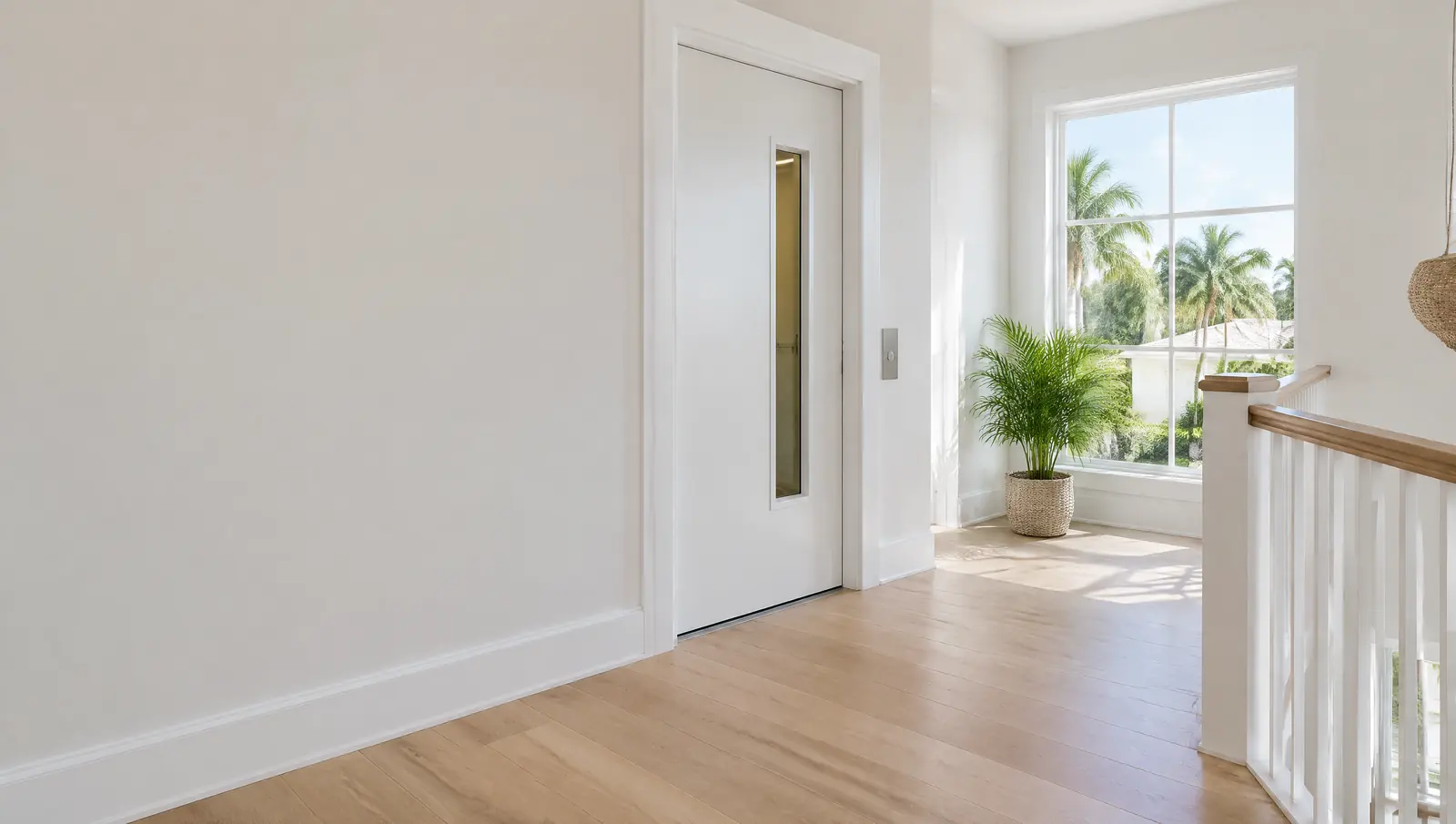
Home elevator installation in Tampa
Planned for Tampa Bay permits, raised homes and surge risk.
Free home lift quote
Tell us a little about the home and who it is for. We will call you back to talk it through and arrange a free visit to measure.
We start with a free visit to measure the space, check power and structure, and talk through who will use the elevator and how.
- Free in-home consultation, no obligation
- Home elevators, stair lifts and platform lifts
- Miami-Dade, Broward, Palm Beach, Tampa Bay and Naples
The short answer
A home elevator installation usually costs $35,000 to $60,000 and takes from one to three days for a shaftless model to three or four weeks for an elevator with a shaft, according to Fixr. Hillsborough and Pinellas leave elevator regulation to the state: condo and other shared-area lifts are permitted by the DBPR bureau, not a county office.
Last updated
Who this is for
This page is for anyone ready to move from "should we?" to "how do we?". If you are arranging this for a parent, it explains what will happen in the house, and for how long.
- Homeowners planning a retrofit
- Families building or remodelling a long-term home
- Adult children organising the project for a parent
Typical project sizes
A two-storey installation is the most common job. Fixr's national figures for pneumatic models run $38,000 to $55,000 for two storeys and about $10,000 more for each extra floor.
Does a home elevator installation in Tampa need a permit?
Inside the City of Tampa, the Construction Services Division provides all building permit and inspection services, so that is where an elevator for your home is permitted; in St. Petersburg, Clearwater and unincorporated Pinellas, the local building department or Pinellas County Building and Development handles it. The state elevator bureau does not regulate elevators serving one family residence.
Neither Hillsborough nor Pinellas is a contracted elevator jurisdiction, so an elevator serving shared condo areas is permitted and inspected by the state bureau directly, at $325 to install a regulated conveyance.[6][7][8][2]
Tampa houses and home elevator installation
About 56 percent of Hillsborough County homes are detached houses, the highest share of the areas we serve, and many are single-storey. In those homes the need is often a few entry steps, which is porch lift or short stair lift territory, while two-storey homes in newer suburbs suit an elevator or stair lift.
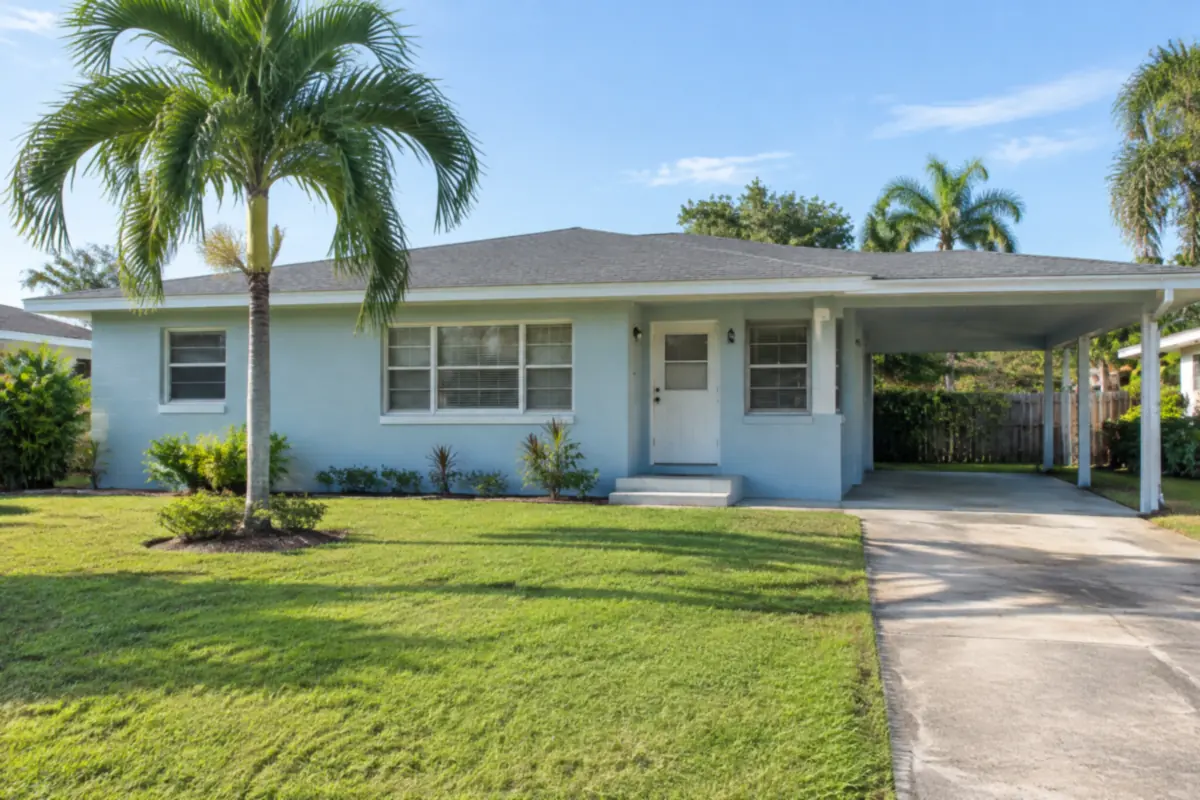
About 59 percent of Pinellas County homes were built before 1980, and the median home dates from 1976; in the City of Tampa the figure is 42 percent. Bungalows in Seminole Heights and Hyde Park and 1960s block ranches in Pinellas often have raised floors with front steps, narrow doorways and older wiring.
About 27 percent of Pinellas County residents are 65 or older, against 16 percent in Hillsborough. Pinellas has an older population than Hillsborough, and older housing to match.[3][9][4]
Help paying for a home elevator installation in Hillsborough
For Medicaid long-term care, Hillsborough is in Region D and Pinellas in Region C. Screening starts with Senior Connection Center on (813) 740-3888 (toll free (800) 336-2226) in Hillsborough, or the Area Agency on Aging of Pasco-Pinellas on (727) 570-9696. Elevators are not named among covered adaptations. Eligible veterans can apply for the VA's Specially Adapted Housing grant, up to $126,526 in fiscal year 2026; James A. Haley Veterans' Hospital on Bruce B. Downs Boulevard is the local VA hospital.[10][11][12][13][14][5]
What is different about a home lift in Tampa Bay?
Tampa Bay is outside the High Velocity Hurricane Zone, which covers only Miami-Dade and Broward, so outdoor lifts follow the standard Florida wind rules. Storm surge is the bigger planning point: Hurricane Helene brought 5 to 7 feet of inundation within Tampa Bay in September 2024, and the St. Petersburg tide gauge set a record of 6.31 feet above high tide. FEMA expects a float switch on any elevator that could descend below the base flood elevation.[15][16][17]
Permits in Tampa
- City of Tampa Construction Services Division: Provides all building permit and inspection services for property development in the City of Tampa, including the building and electrical permits for a home lift.
- Pinellas County Building and Development: Building permits in unincorporated Pinellas County; St. Petersburg, Clearwater and other cities run their own building departments.
- Florida DBPR Bureau of Elevator Safety: Regulates covered elevators directly in Hillsborough and Pinellas, such as lifts in shared condo areas ($325 to install a regulated conveyance). Lifts serving only one family residence are not regulated by the bureau.
What are the steps of a home elevator installation?
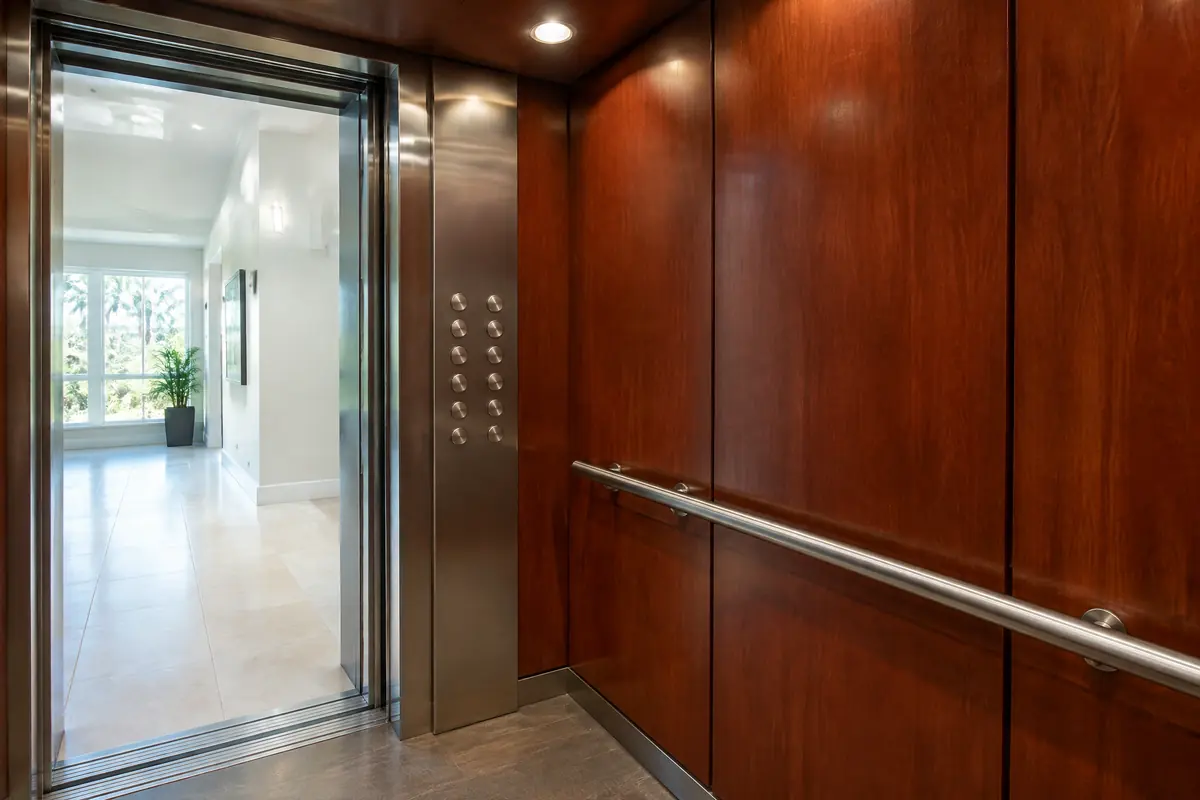
- Free home visit: measure each landing, check the floor structure, ceiling heights and electrical service.
- Choose the type and finish, and agree a written price and timeline.
- Drawings and permits: your installer prepares plans for your city or county building department.
- Building work: framing a shaft or opening the floor, plus any electrical work.
- Installation of rails, cab, doors and controls, then testing and a walk-through of every safety feature.
How long does the installation take?
Fixr says shaftless models can usually be installed in one to three days. Elevators that need a shaft and a machine room can take three to four weeks. Permit review and any structural work come on top of that, so ask for a full timeline in writing.[1]
What should the installer show you before work starts?
Florida's elevator law does not cover elevators inside private homes, apart from the Max Grablin Act door gap rules for new elevators. Because of that, ask every installer for its state registration if it holds one, proof of insurance, the permit plan for your city or county, and how the doors meet the 3/4 inch and 4 inch clearance rules.[19]
Frequently asked questions
Who permits a home elevator installation in Tampa?
Inside the city, the Construction Services Division, which provides all building permit and inspection services. Pinellas homes go through their city or Pinellas County Building and Development.
Does a raised Tampa Bay home need a flood plan for a home elevator installation?
Yes, if the cab could descend below the base flood elevation. FEMA expects a float switch or equal system, and pumps and controls above flood level where possible.
Are most Tampa homes single-family houses?
Yes. About 56 percent of Hillsborough County homes are detached houses, according to the 2024 American Community Survey.
Sources
- Home Elevator Cost (national cost guide, updated 31 Jan 2025), Fixr. Accessed October 28, 2026.
- Elevator Safety: Contracted Jurisdictions, Florida DBPR, Bureau of Elevator Safety. Accessed October 28, 2026.
- Units in Structure, table B25024, American Community Survey 2024 1-year estimates, U.S. Census Bureau via Census Reporter. Accessed October 28, 2026.
- Sex by Age, table B01001, American Community Survey 2024 1-year estimates, U.S. Census Bureau via Census Reporter. Accessed October 28, 2026.
- James A. Haley Veterans' Hospital, U.S. Department of Veterans Affairs. Accessed October 28, 2026.
- Construction Services Division, City of Tampa. Accessed October 28, 2026.
- Building and Development, Pinellas County. Accessed October 28, 2026.
- Elevator Safety: Applying for Elevator Permits, Florida DBPR, Bureau of Elevator Safety. Accessed October 28, 2026.
- Year Structure Built, tables B25034 and B25035, American Community Survey 2024 1-year estimates, U.S. Census Bureau via Census Reporter. Accessed October 28, 2026.
- Florida Statutes s. 409.966, Statewide Medicaid Managed Care regions, Florida Legislature. Accessed October 28, 2026.
- Aging and Disability Resource Centers (ADRCs), Florida Department of Elder Affairs. Accessed October 28, 2026.
- Senior Connection Center: Area Agency on Aging and ADRC for Hillsborough, Polk, Manatee, Highlands and Hardee Counties, Senior Connection Center. Accessed October 28, 2026.
- SMMC Long-term Care Program Coverage Policy (Home Accessibility Adaptation), Florida Agency for Health Care Administration. Accessed October 27, 2026.
- Disability housing grants for Veterans (SAH, SHA, TRA), U.S. Department of Veterans Affairs. Accessed October 28, 2026.
- Product Control brochure: Ensuring Strict Standards for Construction Materials, Miami-Dade County. Accessed October 27, 2026.
- Tropical Cyclone Report: Hurricane Helene (AL092024), NOAA National Hurricane Center. Accessed October 28, 2026.
- NFIP Technical Bulletin 4: Elevator Installation for Buildings Located in Special Flood Hazard Areas (June 2019), FEMA. Accessed October 28, 2026.
- FEMA Flood Map Service Center, FEMA. Accessed October 28, 2026.
- Florida Statutes Chapter 399, Elevator Safety, Florida Legislature. Accessed October 28, 2026.
- Stairlift Installation Cost (national cost guide, updated 31 Jan 2025), Fixr. Accessed October 28, 2026.
- Wheelchair Ramp Installation Cost (national cost guide, updated 31 Jan 2025), Fixr. Accessed October 28, 2026.
- Elevator Permit, City of Miami Beach. Accessed October 27, 2026.
Get a free quote
Tell us about your project and we will get back to you fast.