
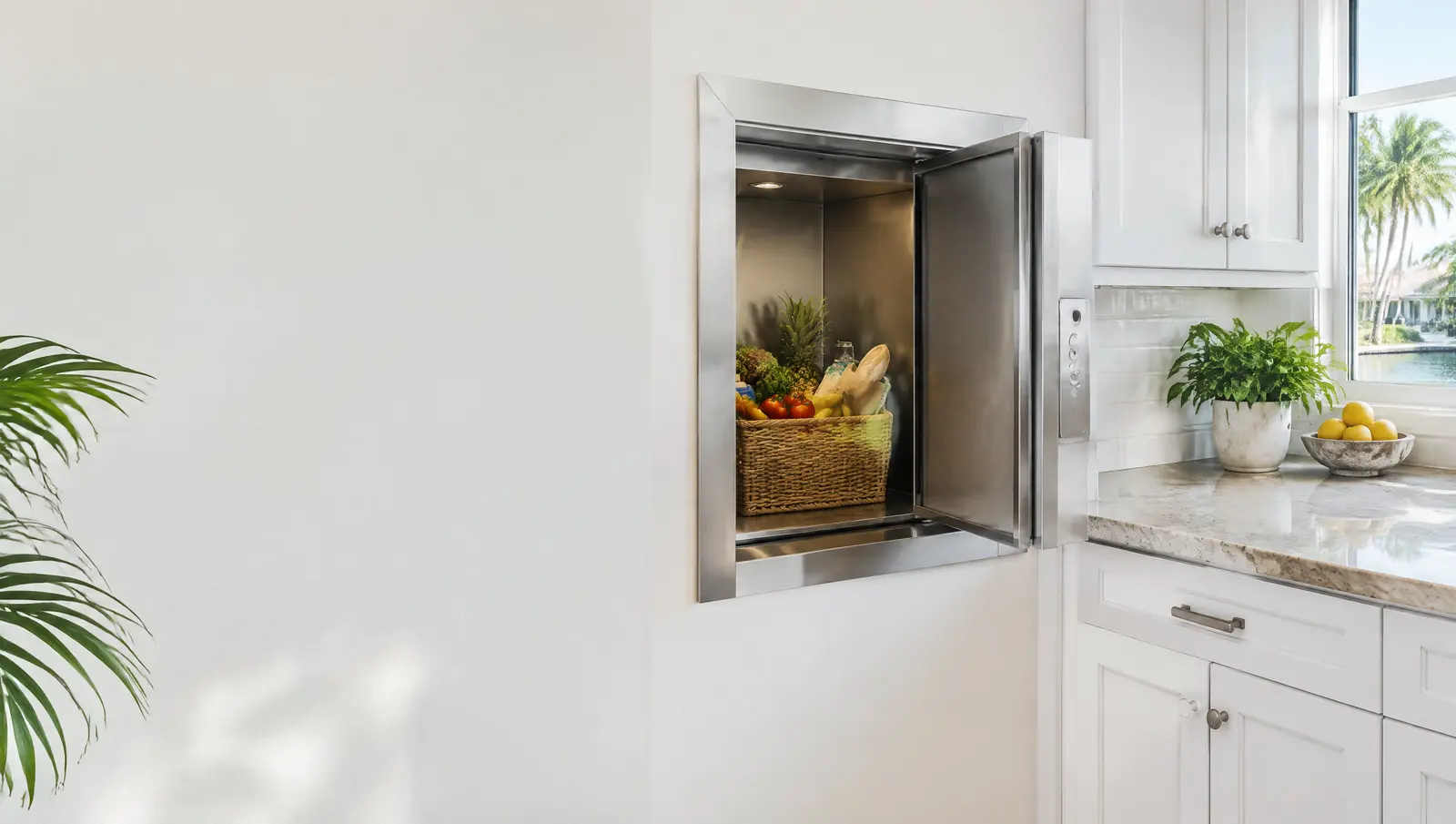
Residential dumbwaiters in Naples
Dumbwaiters for raised Naples homes with a garage below.
Free home lift quote
Tell us a little about the home and who it is for. We will call you back to talk it through and arrange a free visit to measure.
A dumbwaiter is a small lift for things, not people. It is a simple way to make stairs safer when carrying is the main problem.
- Free in-home consultation, no obligation
- Home elevators, stair lifts and platform lifts
- Miami-Dade, Broward, Palm Beach, Tampa Bay and Naples
The short answer
A residential dumbwaiter is a small lift that carries goods, not people, usually from a garage or kitchen to the floor above. About 43 percent of Collier County homes are detached houses and 17 percent are in buildings of 20 or more units (ACS 2024).
Last updated
Who this is for
Dumbwaiters help people who can still climb stairs but should not carry things while they do, and households where groceries, laundry or a wheelchair battery have to move between floors every day.
- Garage to kitchen in a raised home
- Kitchen to bedrooms for laundry
- Stacked homes and townhouses
Do residential dumbwaiters in Naples need a permit?
The state elevator bureau does not regulate conveyances serving only one family residence, and hand-operated dumbwaiters are outside the law entirely. A powered dumbwaiter in Collier needs local building and electrical permits.
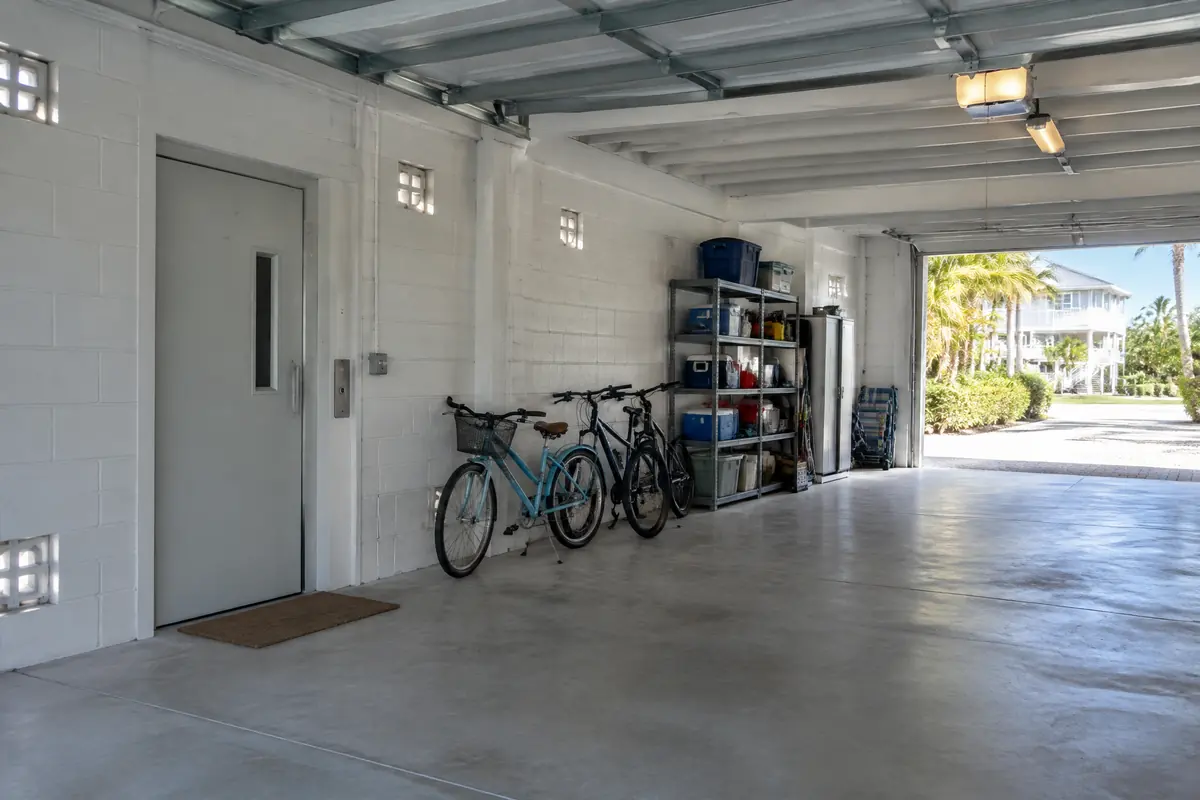
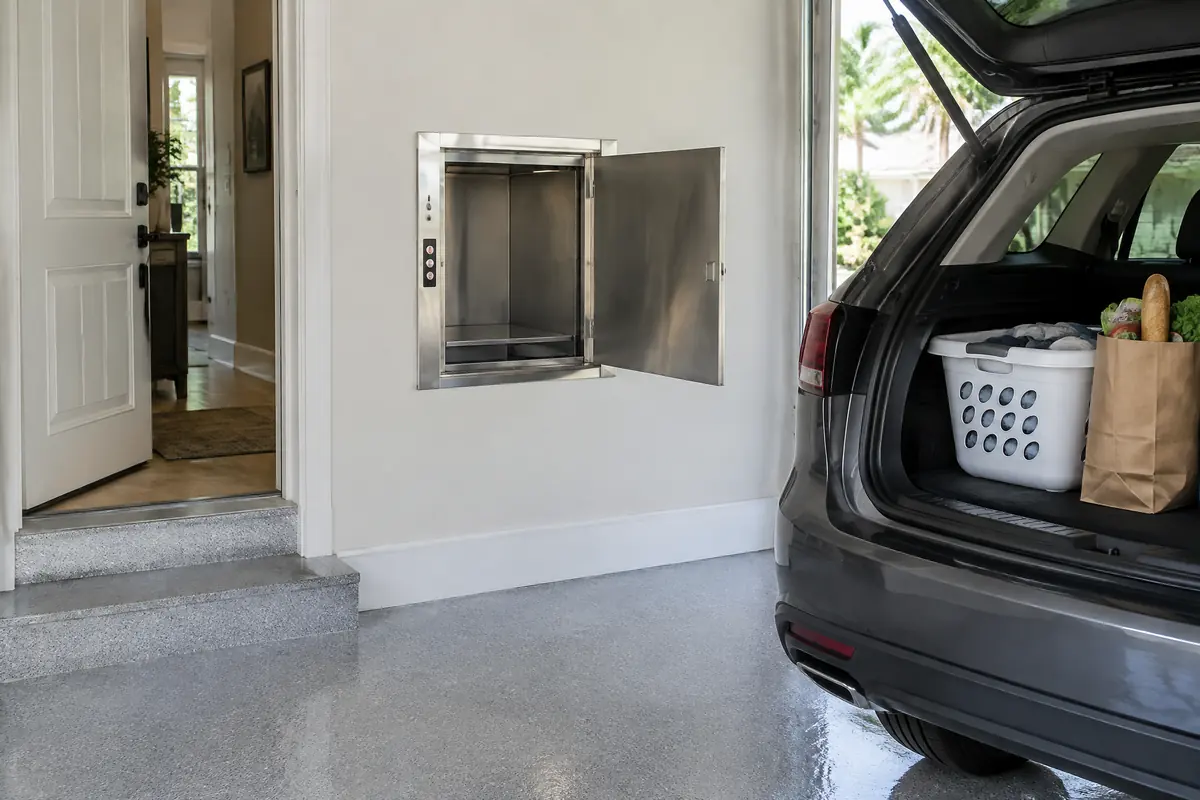
In a raised Naples home with the garage underneath, a dumbwaiter is the simplest way to move groceries, luggage and laundry up a floor. Keep the drive above the flood level and the bottom landing easy to clean out after high water.[6][7][8][9]
Naples houses and residential dumbwaiters
About 43 percent of Collier homes and 58 percent in neighbouring Lee County are detached houses. Many newer homes are single-storey on a raised slab or raised fully above a garage, so the climb is often outside the house.
Collier's housing is young: about 46 percent of homes were built in 2000 or later, and the median home dates from 1998. Newer homes often have wider stairs and stronger walls, which can make a stair lift or elevator simpler to fit than in older South Florida houses.
About 34 percent of Collier County residents are 65 or older, and 29 percent in Lee County, the highest shares of the areas we serve. Planning a lift early lets a household choose the model and wait out lead times without pressure.[1][2][10]
Naples home values and residential dumbwaiters
The median owner-occupied home in Collier County is valued at about $636,600. IRS Publication 502 says medical lifts usually do not add value, but elevators generally do, which affects any medical expense deduction.[3][11]
What is different about a home lift in Naples?
Storm surge shapes everything here. Hurricane Ian brought 6 to 9 feet of inundation to Naples and 8 to 12 feet to Bonita Springs and North Naples, and the Naples Pier tide gauge recorded 6.18 feet above high tide before it was destroyed. FEMA expects a float switch or equal system on any elevator whose cab could descend below the base flood elevation, with pumps and controls kept above that level where possible.
Collier is outside the High Velocity Hurricane Zone, so outdoor lifts follow the standard Florida wind rules; the surge, salt and sun are what shorten their life.[12][9][14]
Permits in Naples
- Collier County Building Permits and Construction: Building and electrical permits for unincorporated Collier County. The City of Naples and Marco Island issue permits inside their limits; check with your building department for the submittal list.
- Florida DBPR Bureau of Elevator Safety: Regulates covered elevators directly in Collier and Lee, such as lifts in shared condo areas ($325 to install a regulated conveyance). Lifts serving only one family residence are not regulated by the bureau.
What does Florida law say about home dumbwaiters?
Chapter 399 defines a dumbwaiter as a hoisting and lowering mechanism with a car of limited size that moves in guide rails and serves two or more landings. It lists hand-operated dumbwaiters as equipment not covered by the chapter. DBPR's elevator bureau says conveyances located in and serving only one family residence are not regulated by the division. Local building and electrical permits can still apply, so your installer should confirm them with your building department.[7][6]
Where does a dumbwaiter fit?
It needs a small vertical run of stacked wall or closet space and a door on each floor. Garage to kitchen is the most common route in Florida homes that sit above parking.
Frequently asked questions
Does a dumbwaiter in Naples need a permit?
No state permit for one serving only your home. A powered unit needs local building and electrical permits.
Is a dumbwaiter worth it in a raised Naples home?
For many households, yes. It moves groceries and laundry from the garage below to the living floor without the stairs.
Are most Naples area homes houses?
About 43 percent of Collier homes and 58 percent of Lee County homes are detached houses.
Sources
- Units in Structure, table B25024, American Community Survey 2024 1-year estimates, U.S. Census Bureau via Census Reporter. Accessed October 28, 2026.
- Year Structure Built, tables B25034 and B25035, American Community Survey 2024 1-year estimates, U.S. Census Bureau via Census Reporter. Accessed October 28, 2026.
- Median Value of owner-occupied housing, table B25077, American Community Survey 2024 1-year estimates, U.S. Census Bureau via Census Reporter. Accessed October 28, 2026.
- Aging and Disability Resource Centers (ADRCs), Florida Department of Elder Affairs. Accessed October 28, 2026.
- Area Agency on Aging for Southwest Florida: counties served, Area Agency on Aging for Southwest Florida. Accessed October 28, 2026.
- Elevator Safety: Applying for Elevator Permits, Florida DBPR, Bureau of Elevator Safety. Accessed October 28, 2026.
- Florida Statutes Chapter 399, Elevator Safety, Florida Legislature. Accessed October 28, 2026.
- Building Permits and Construction: Permitting Resources, Collier County. Accessed October 28, 2026.
- NFIP Technical Bulletin 4: Elevator Installation for Buildings Located in Special Flood Hazard Areas (June 2019), FEMA. Accessed October 28, 2026.
- Sex by Age, table B01001, American Community Survey 2024 1-year estimates, U.S. Census Bureau via Census Reporter. Accessed October 28, 2026.
- Publication 502 (2025), Medical and Dental Expenses, Internal Revenue Service. Accessed October 28, 2026.
- Tropical Cyclone Report: Hurricane Ian (AL092022), NOAA National Hurricane Center. Accessed October 28, 2026.
- FEMA Flood Map Service Center, FEMA. Accessed October 28, 2026.
- Product Control brochure: Ensuring Strict Standards for Construction Materials, Miami-Dade County. Accessed October 27, 2026.
- Elevator Safety: Contracted Jurisdictions, Florida DBPR, Bureau of Elevator Safety. Accessed October 28, 2026.
- Florida Statutes s. 409.966, Statewide Medicaid Managed Care regions, Florida Legislature. Accessed October 28, 2026.
- Naples VA Clinic (VA Bay Pines health care), U.S. Department of Veterans Affairs. Accessed October 28, 2026.
- Lee County VA Clinic (VA Bay Pines health care), U.S. Department of Veterans Affairs. Accessed October 28, 2026.
- Disability housing grants for Veterans (SAH, SHA, TRA), U.S. Department of Veterans Affairs. Accessed October 28, 2026.
- Stairlift Installation Cost (national cost guide, updated 31 Jan 2025), Fixr. Accessed October 28, 2026.
- Home Elevator Cost (national cost guide, updated 31 Jan 2025), Fixr. Accessed October 28, 2026.
Get a free quote
Tell us about your project and we will get back to you fast.